
Project Overview
| Project Name | Academy for Global Citizenship New Campus – Administration |
| Certification Type | Living Certified |
| Location | Chicago, Illinois |
| Typology | New Building |
| Start of Occupancy | 09/01/2023 |
| Owner Occupied | Academy For Global Citizenship |
| Occupancy Type | Educational |
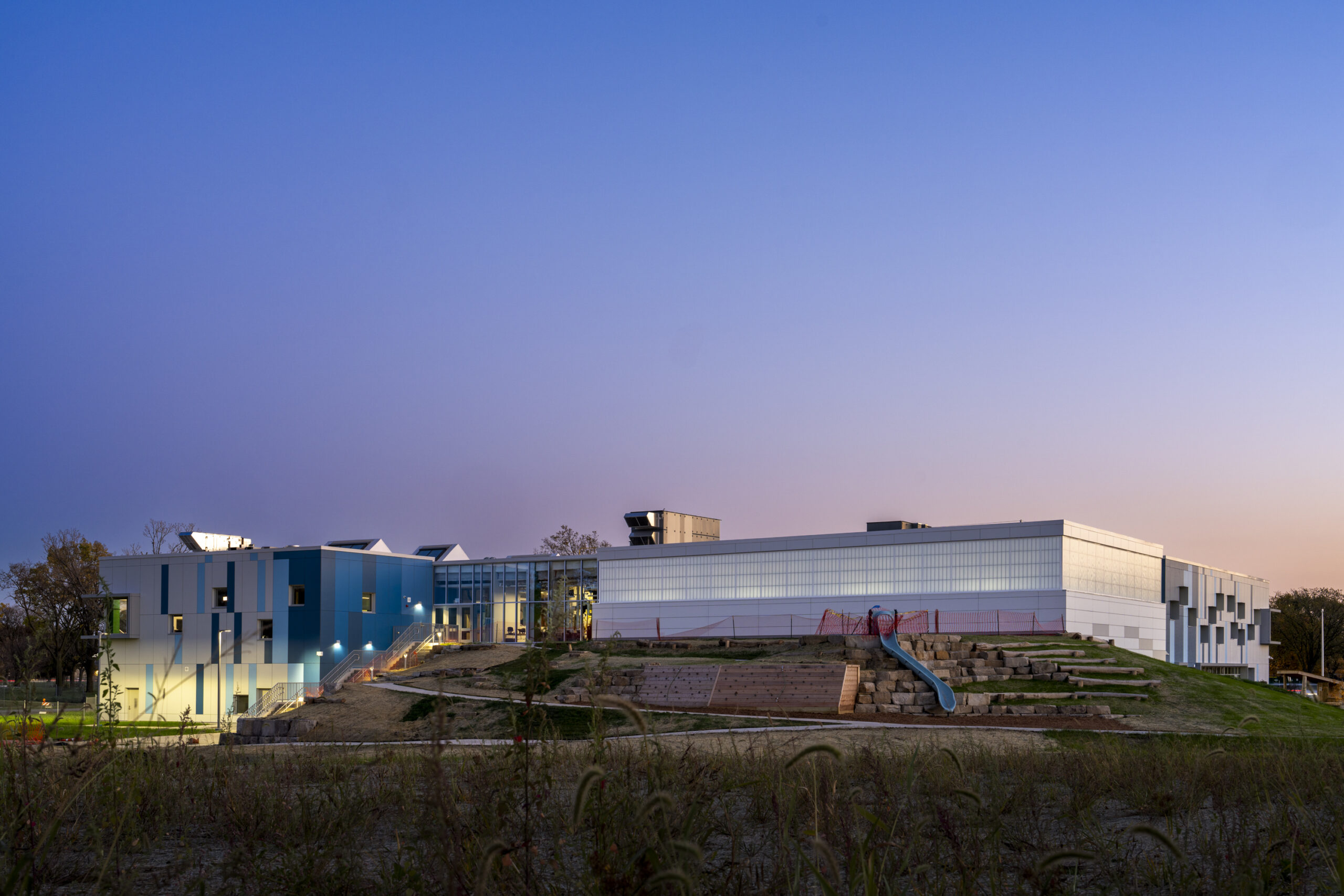
Photo Credit: Tom Rossiter Photography
The Academy For Global Citizenship is a 2 story 70,000 square foot K-8 Primary School located in a urban setting on 6 acres of previously developed land. The school serves approximately 600 students, has an on site day care, early childhood program and community health center. On the 6 acres food is grown and served to the community through an on site market.
Project Team
| Owner | Academy For Global Citizenship |
| Project Manager | Urban Resolve |
| General Contractor | Power Construction |
| Architects | SMNGA |
| Landscape Architect | Site Design |
| MEP Engineers | dbHMS |
| Civil Engineer | V3 |
| Structural Engineer | Stearn-Joglekar |
| Materials/IAQ | WSP Building Systems |
| Acoustical Consultant | SM&W |
| Certification Consultant | Farr Associates |
Early Design Process
During a period of ten plus years, the client hired three different architect-led teams to design the building to a conceptual level so that the plans and renderings could be used for fundraising. Inspired by the school’s aspirational focus, each of the architects proposed to pursue LEED Certification at varying levels. Farr Associates was initially brought in by the Owner’s Representative to serve as a consultant to elevate the team’s sustainability capacities. The project had set a goal of achieving LEED Silver certification.
During the kickoff workshop our principal pulled the client into a sidebar meeting to ask “why was the sustainability target LEED Silver?” I am not sure, what should it be?” “Living Building Challenge.” “Can we achieve that?” “Absolutely!” This quick exchange led to a series of sidebar meetings with the client and Owner’s Rep. (Urban ReSolve) and General Contractor (Power Construction) to discuss the viability, pros, and cons of pursuing LBC Certification.
It was decided that LBC Certification was consistent with the school’s global aspirations and that being sustainably ambitious could help with fundraising (the school had yet to identify core funding). Before committing to LBC, two barriers had to be overcome: 1. Understanding and managing the cost premiums and 2. The team’s inexperience with LBC.
The soft and hard cost premiums associated with achieving LBC certification were discussed extensively and resulted in the following:
- The A/E fees were increased to somewhat above the cost of LEED Platinum Certification
- Specialty consultants were added to support the extensive vetting and advocacy associated with attaining the Materials Petal
- The hard cost premiums associated with attaining the Energy Petal (solar panels and batteries) were taken out of the GC budget and made an Owner’s responsibility
- A specialty consultant was added to design an on-site wastewater treatment system and to advocate for its approval
- The General Contractor allocated cost premiums to many budget line items and contingencies
Since the current architecture team did not have sustainability expertise, the decision was made to assemble a new LBC-optimized design team, nearly from scratch. The team was led by an architectural partnership between AOR SMNGA Architects (school specialists) and Collaborting Architect Farr Associates (LBC experience as AOR on the LBC-Petal Certified Keller Center). Firms with previous integrated design experience included dbHMS (MEP, Energy Modeling), Site Design Group (Landscape), V3 (Civil), and Steran Joglekar (structural) rounded out the core team.
The Owner secured project funding from the State of Illinois, unrelated to the LBC commitment. The LBC commitment did help raise money for the renewable energy systems. The project was designed, bid, and started construction during Covid and experienced real-time cost increases due to supply chain issues.
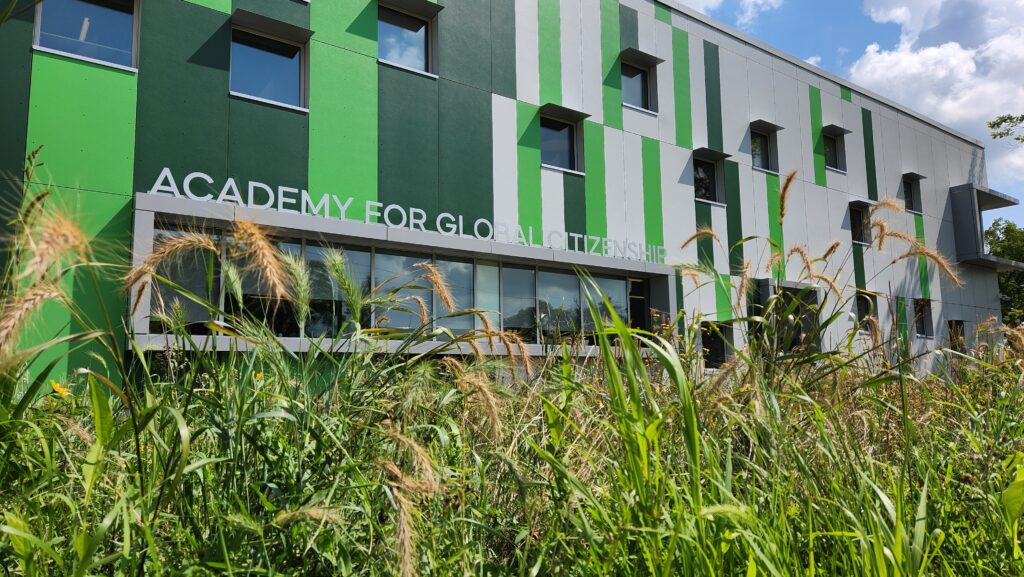
Photo Credit: Farr Associates
Construction
Through the end of design AGC was on track to show how a tight Owner, Designer, and Contractor collaboration made it possible to efficiently achieve LBC certification, especially through the submittal and construction process. The team’s prior experience taught them that smaller subcontractors and suppliers can be particularly hard to track down after submittals are approved, and payment is made in full. To address this concern, the team started with the “end in mind”, integrating the Materials Petal documentation (Declare, etc.) into the routine submittal process.
Unfortunately, the Coronavirus pandemic happened early in the project. The design team led a full day Integrated Design Workshop (50% Schematic Design) on Friday March 13th, the last workday before Covid shut the world down. The resulting chaos placed unforeseen stresses on the project in the form of design and entitlement delays, supply chain disruptions, and volatile material pricing. Covid forced this orderly system to be abandoned.
The project had an inviolable delivery date: that the school be ready to receive students in mid-summer 2023. Against this challenging context, the contractor was struggling to deliver the project on time and on budget. Providing LBC-related documentation, alongside routine submittals, was slowing the project down to the point of missing the project’s “drop dead” date. To keep the project on schedule, the Owner’s Representative directed the architect to edit the submittal requirements to omit the required LBC documentation.
This one “tough call” both saved the project and cast a pall on it. The school opened on time to enthusiastic students and rave reviews, based on the assumption that AGC was on the path to LBC certification. However, this outcome was uncertain because the documentation related to the LBC Materials Petal had not been submitted. The design team and GC was forced to scramble to exert pressure on every contractor and supplier to submit their documentation after the fact. Final proof that the Materials Petal could be achieved occurred early in 2025 more than a year after the school was occupied. The stress of not knowing if the building would certify was an unavoidable consequence of the pandemic.
The other unanticipated construction item was miscellaneous thermal bridges that were part of a sub assembly. Particularly the roof supports had more steel than anticipated, and quick mitigations had to be developed in the field. All to a successful conclusion.
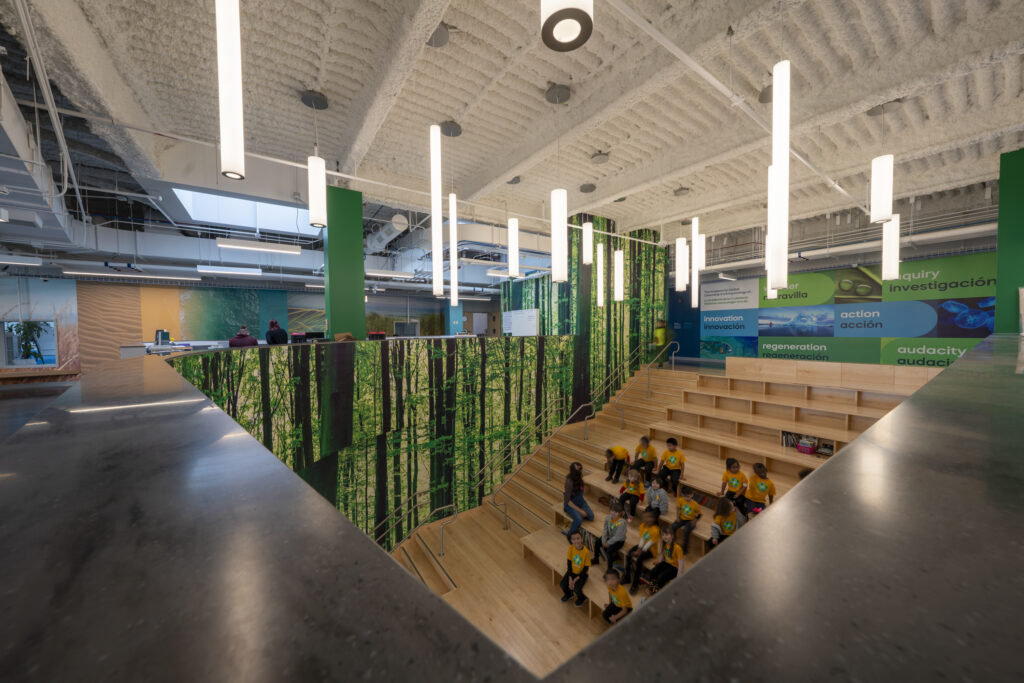
Photo Credit: Tom Rossiter Photography
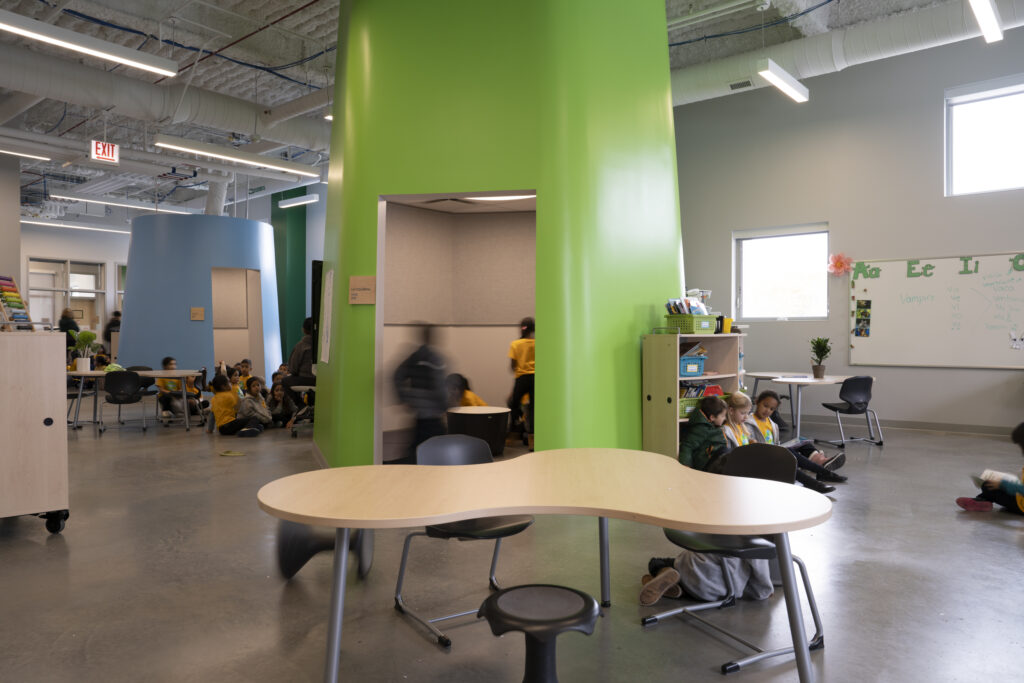
Photo Credit: Tom Rossiter Photography
Advice
The Living Building Challenge® is a very rigorous program and there is a steep learning curve for any individual who has not previously gone through the LBC process. The documentation is demanding and time consuming, the pressure on design fees is substantial, and the performance period for energy and water can be nerve wracking. AGC’s energy performance period was eerily smooth. The project passed on the first try with a slight cushion—107% supplied versus 105% required—with no behavioral interventions required whatsoever.
Our advice if for project teams to make sure they have enough of the right mix of experience and expertise. Specifically, it is highly recommended to include specialty team members with prior LBC-experience on the Water and Materials Petals.
Optimal conditions for project teams pursuing LBC:
- Every member of the team—Owner, Designer, and Contractor—is mission-driven.
- Every member of the team—Owner, Designer, and Contractor—is bought into the vision and is collaborative, flexible, and pulling for the project’s successful certification.
- The design team has experience leading a sophisticated Integrated Design Process that leads to cost savings and performance synergies.
- The team has experience with high-level green building certification (ideally LBC) but may include LEED Platinum or LEED Zero.
- The team understands exactly what is required to meet the big three Petals—Energy, Water and Materials—both in terms of staffing/consultants and hard cost premiums.
- The design fees and preliminary construction budget reflect LBC realities.
- The team has “gamed out” behavioral adjustments in case the performance period does not go as planned.
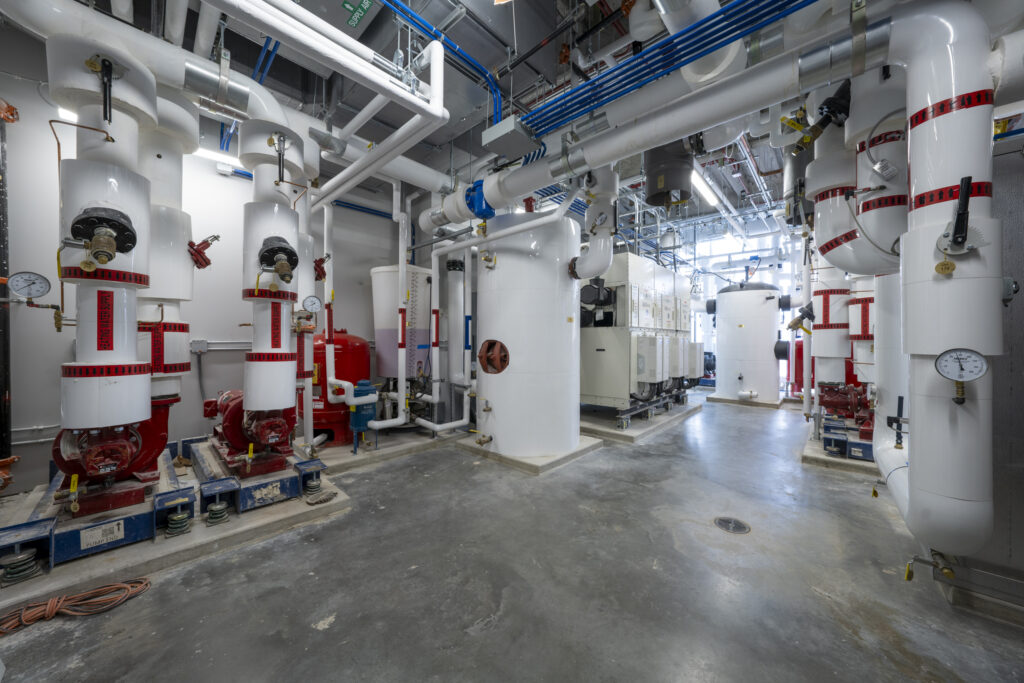
Photo Credit: Tom Rossiter Photography