
Project Overview
| Project Name | 2517 Eastlake |
| Certification Type | Petal Certified under Living Building Challenge v3.1 |
| Petals | Place, Energy, Beauty |
| Location | Seattle, Washington |
| Typology | Building |
| Start of Occupancy | 04/13/2024 |
| Occupancy Type | Residential / Mixed-Use |
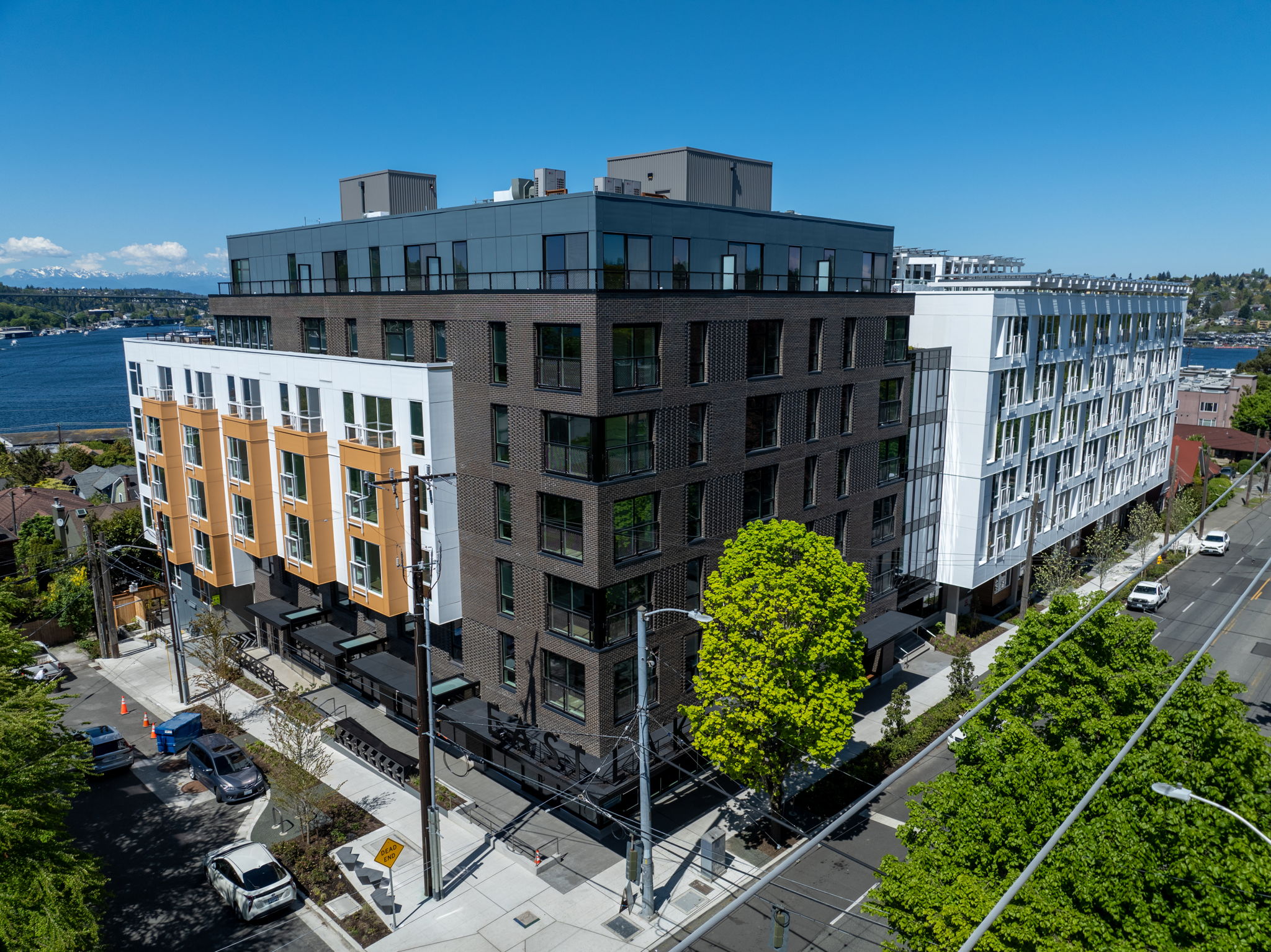
Photo Credit: SKY SOLUTIONS NORTHWEST
Project Team
| Owner | Washington Holdings |
| Owner | Pollard Entities |
| General Contractor | Compass |
| Architects | Hewitt |
| Landscape Architect | Hewitt |
| MEP Engineer | IMEG (formerly Rushing) |
| Civil Engineer | Navix |
| Structural Engineer | Yu & Trochalakis, PLLC |
| Interior Design | Susan Marinello Interiors |
| Sustainability Consultant | IMEG (formerly Rushing) |
Place Petal
I01 Limits to Growth
Liza was developed on a site that had been developed as early as 1903. The project site is not on or adjacent to any sensitive ecological habitats or 100-year floodplain areas. Preserving and managing biodiversity and natural resources was a key focus for the Liza design team. The landscape design emulates the Puget Lowland Forest ecosystem with a deliberate selection of native plants which provide wildlife and avian habitat. This layered approach is supported by hosting over 50,000 pollinators on the site in two hives.
Landscape maintenance is carefully managed, both to limit unnecessary water usage and to restrict the use of any petrochemical fertilizers or pesticides. Aligning our water conservation goals with our landscape maintenance contractor has been a challenge we’ve had to overcome. The property management team has had to focus on ensuring frequent communication about when the irrigation system is activated and watering durations with the landscape maintenance contractors. They have successfully collaborated to ensure the Liza landscaping is thriving without excessive watering.
I02 Urban Agriculture
Liza’s rooftop hosts over 50,000 bees in two hives and includes native flowering plantings specifically for our bee population. Honeybees are an indicator species that will help the project infer the state and health of the local ecosystem. Having bees on the property protects wild and ecologically significant places by pollinating and, therefore, proliferating local plant species and increasing biodiversity. The beehives encourage ecological regeneration by enhancing the function of the local ecosystem. Increased biodiversity has a multitude of impacts, including clean air, clean water, more raw materials, etc. The project’s apiary consultant, Best Bees, utilizes Honey DNA reports to get a snapshot of how the local ecosystem has changed since having bees on the property.
We were thrilled to distribute our first honey harvest in November of 2024. Best Bees packaged the honey and it was distributed to residents, who greatly appreciated the connection to the rooftop hives.
While no pesticides are used at Liza, our bees travel up to three miles away from their hive to pollinate. We were saddened to learn this spring that our bees encountered pesticides, causing the entire colony to die off. The property management team conducted a full audit to ensure the landscape maintenance wasn’t the culprit. Best Bees has restocked our pollinators and we hope for greater success with our new colony.
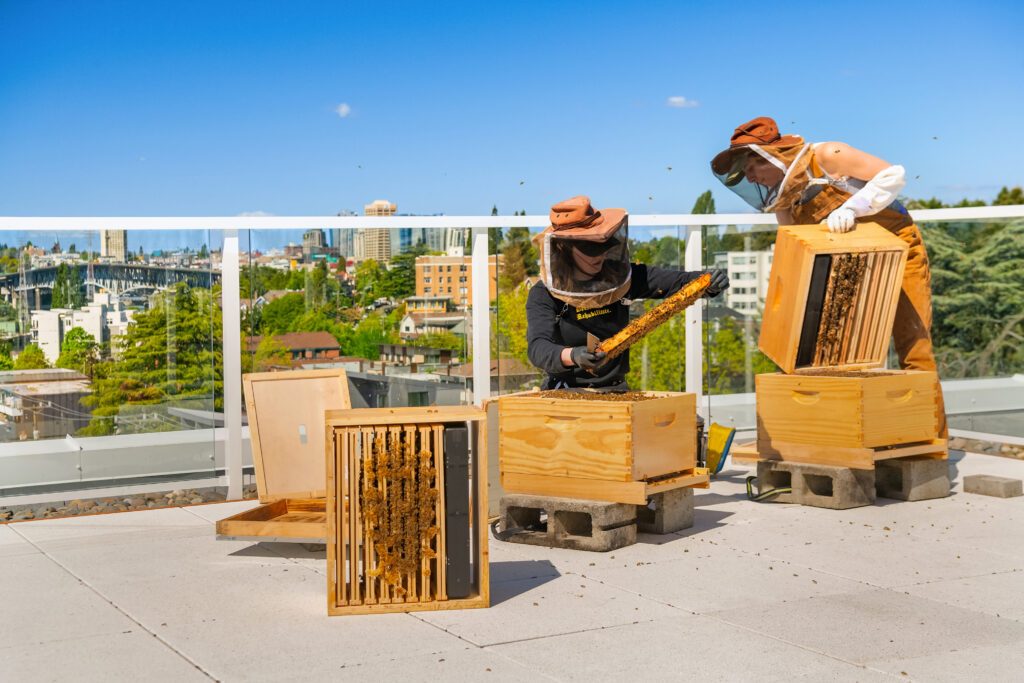
PHOTO CREDIT: Clarity NW – Ryan Slimak
I03 Habitat Exchange
Established in 1989, Forterra NW is a 501(c)3 nonprofit land trust, accredited by the Land Trust Accreditation Commission. With experts working across Washington’s landscapes to conserve properties in the public interest, Forterra NW is a national innovator, combining conservation, community real estate and policy development to deliver on their mission. They have completed over 400 land transactions covering more than 275,000 acres, reaching more than 100 counties, cities and towns.
Alukw’át Nisháykt or “Frog’s Home” is located south of Union Gap, near Yakima, where the Yakima River flows wide through the landscape forming braids of new and old water patterns. For millions of years this river, the longest in Washington, has shaped the landscape by constantly altering its course. In doing so, it has created a thriving wetland, rich in plants and wildlife; miles of cottonwoods and water stargrass provide habitat for hundreds of migratory bird species, all kinds of salmon and trout, deer, elk and big horn sheep. Frog’s Home is 180 acres of significant ancestral and cultural value for the Yakama Nation.
Forterra and the Yakama Nation established a formal conservation partnership in 2021. In early 2022, both parties mutually agreed to pursue the purchase of Frog’s Home to conserve its significant natural and cultural resources. Yakama Nation has secured some of the land for the Frog’s Home, while Forterra has provided interim financing to take the remaining land off the market. Together, we are working to raise the funds necessary to preserve and transfer the property to the Yakama Nation, obtaining ownership of Frog’s Home will restore lands that have been degraded by recent land use.
Liza assisted with these conservation efforts by providing funding for a 1 acre offset through the Habitat Exchange for the Living Building Challenge. With many others, Liza’s support of this project puts 180 beautiful acres of riparian land into preservation forever. It reverses decades of historic use that has been damaging to an otherwise lush and vibrant area. It also is an action point for pushing back on the effects of climate change by restoring large areas of cottonwood trees and other native plants which, in turn, provide a lifeline to threatened species. The collective goal is to restore critical habitat through traditional Tribal stewardship and ultimately return the ecologically and culturally significant site to Yakama Nation ownership.
Through its donation, the Liza project team has fostered a relationship with Forterra that will help facilitate habitat exchanges pursued by future projects.
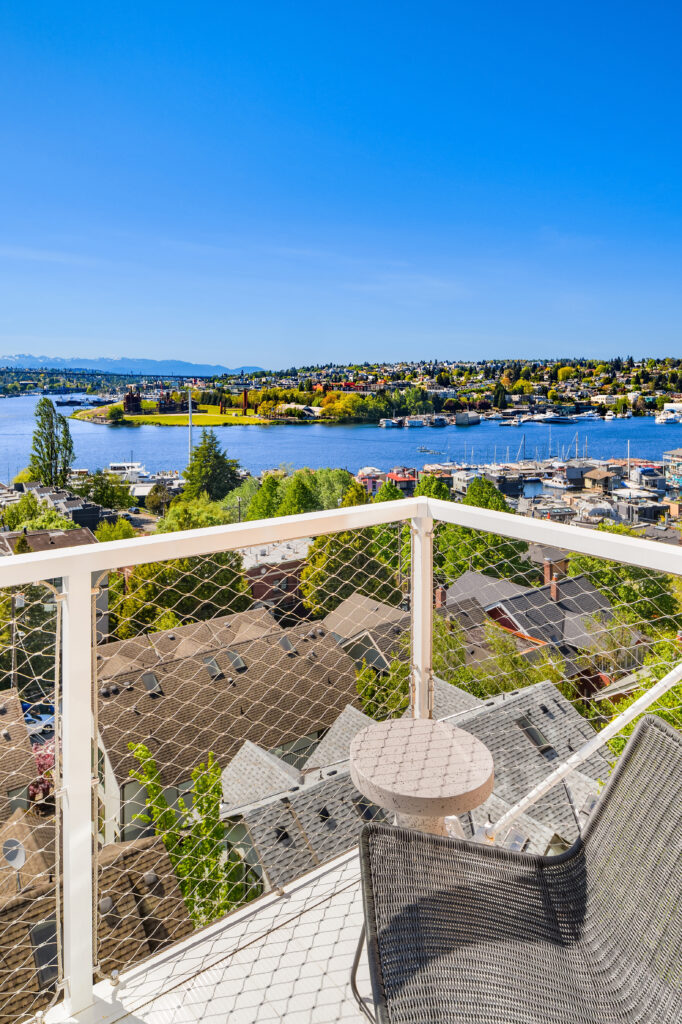
PHOTO CREDIT: Clarity NW – Ryan Slimak
I04 Human Powered Living
Human powered living is prioritized through thoughtful design that encourages healthier alternatives to personal automotive transportation. Located within a well-connected bicycle network of streets with reduced speed limits, painted bicycle lanes, protected bicycle lanes, and bicycle trails, the project’s location lends itself to bicycling. The project design of 2517 Eastlake accommodates and encourages bicycle transportation for its retail and residential occupants through bicycle amenities that include 167 long-term and short-term bicycle stalls, 14 lockers, a shower, and access to bike tools. Additionally, Liza offers all employees (including retail employees) the option of either free transit passes or an annual bike tune-up. Residents utilizing electric vehicles are rewarded with well-located, reserved parking stalls in the garage. While this imperative requires one electric vehicle charging station at Liza, ownership included 20 EV chargers in the project.
Within the building, residents are encouraged to use the stairs instead of taking the elevators. Instead of treating the stairwells as a “back-of-house” space, the design team selected a warm carpet and installed botanical artwork along the walls to encourage their use.
Outside of the building, the design team focused on enhancing wellness and safety in the pedestrian realm. At Louisa Street and Eastlake Avenue, the project extended the existing curb by over eight feet. This curb extension features new plantings, bike racks, and benches and allows for greater pedestrian safety at an intersection where many children cross the street to the neighborhood K-8 school immediately east of the property. The parking garage entrance fronts this popular pedestrian route, so the team added safety warning lights to provide vehicles notice when pedestrians approach the driveway.
Additionally, project ownership advocated for improvements to city-controlled public areas that would greatly enhance pedestrian, cyclist and transit rider safety. The suggested improvements included adding a four-way stoplight at the intersection to increase pedestrian safety, converting the adjacent alley to one-way travel, adding bike lanes, and increasing bus stop and pedestrian safety with additional lighting. Seattle Department of Transportation is currently installing protected bike lanes and enhanced transit stops along Eastlake Avenue. This process provides a model for how our team can advocate in future projects.
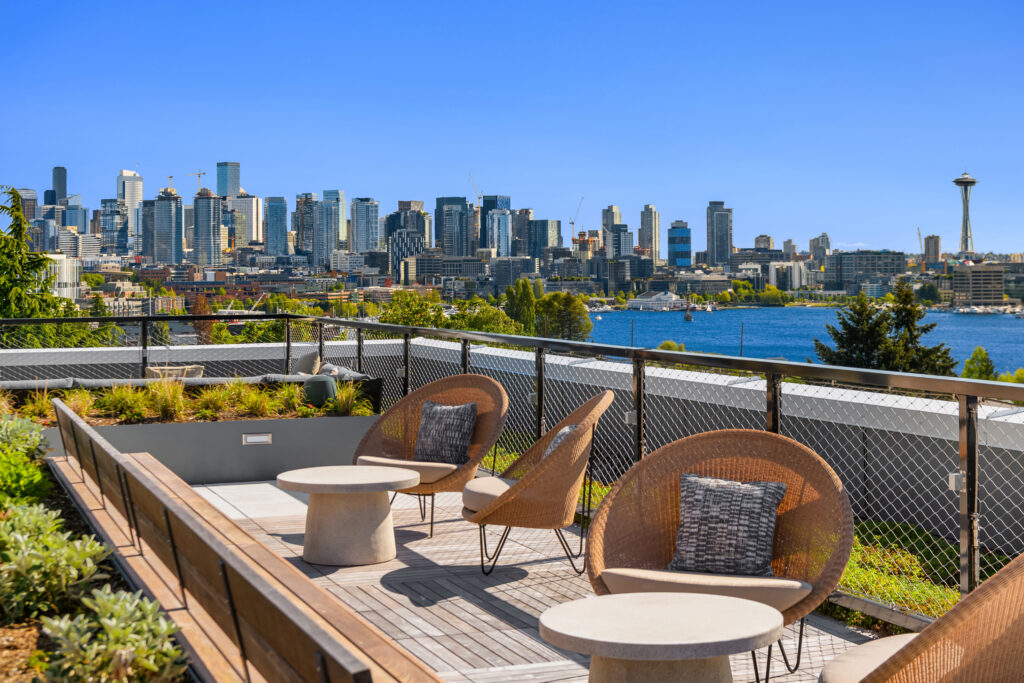
PHOTO CREDIT: Clarity NW – Ryan Slimak
Energy Petal
I06 Net Positive Energy
Liza has reduced its overall energy consumption by more than 25% beyond the Seattle Energy Code’s Target Performance Path and when adjusted for monthly occupancy, saved more than 215,000 kWh over the performance period relative to the ILFI target (75% of the TPP target INCLUDING the full restaurant cooking energy). The design team carefully integrated many design features to help achieve this level of energy efficiency. Liza has a high efficiency building envelope, with triple pane windows and 2×8 wood framing. Domestic water heating is provided by a reverse cycle chiller plant. All residential homes are heated/cooled by a Variable Refrigerant Flow (VRF) system that can efficiently balance heating and cooling needs across the property. All common areas are served by Energy Recovery Ventilation (ERV) systems. No combustion is used for heating or cooling within the building.
Energy use is metered to provide detail to the operations team about how to best optimize energy usage. This is also provided to residential tenants as part of a feedback loop, aimed at modifying resident behaviors.
Liza also achieves net-positive energy by offsetting 134% of the energy used in the building through both an on-site solar array and an offsite renewable energy project. For the on-site solar, the design team had to carefully evaluate the definitions of “available roof area” to determine how to meet the requirements. To achieve the requirements, we cantilevered the solar panels out over the edge of the building, included solar glass canopies in several areas, and built a steel support structure to elevate solar panels above our mechanical equipment. This added quite a bit of structural design (and associated construction cost) and created a warranty challenge, as the manufacturer was not thrilled with the compromised airflow of those mechanical units due to the proximity of the solar panels. Ultimately, the construction team was able to convince the manufacturer to provide the warranty.
The team used an exception to the on-site renewable energy requirement due to the relatively small roof area and higher energy density of apartment buildings. The initial strategy for finding an off-site partner involved utilizing our on-site solar provider, who reached out to clients in their pipeline to find a suitable project the Liza team could finance. After over two years of searching for such a partner within the regional power grid, it became clear that this strategy was not working. The team reached out to ILFI and asked for a further exception to allow us to go beyond the regional power grid. At the time, costs of construction locally were skyrocketing, and many projects weren’t proceeding. Additionally, the cost of hydro-powered electricity locally and the relative lack of sunshine in the Pacific Northwest weren’t compelling many solar projects to move forward. Thankfully, ILFI granted the exception, which allowed the team to send out over 100 emails to renewable energy companies across the country. The team finally connected with Evergreen Renewables, Inc., who was about to break ground on a massive wind farm renovation project in Forsin, Texas. This wind farm will supply clean, renewable energy to one of the country’s dirtiest grids and help Liza achieve net positive energy for the next 15 years.
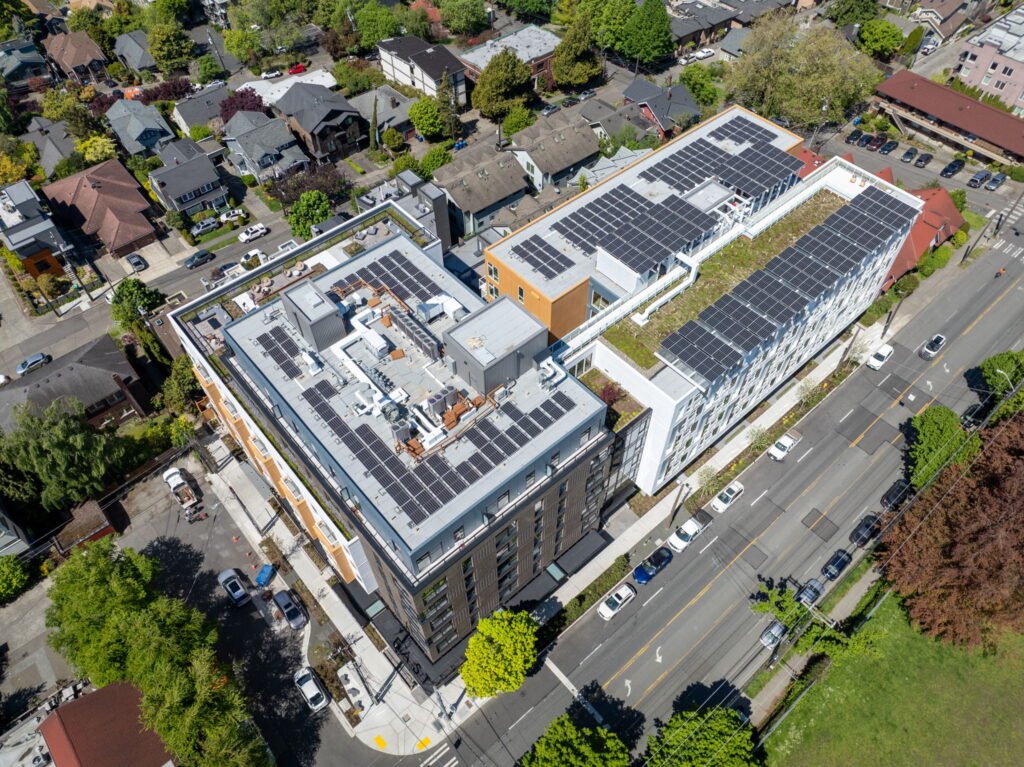
Photo Credit: SKY SOLUTIONS NORTHWEST
Perhaps the greatest challenge to achieving the energy petal requirements was mitigating resident behavior. During the performance period, Liza’s actual energy use didn’t line up exactly with what we modeled. A major reason was tenant behavior in how they utilized HVAC systems set-points and if/when they utilized setbacks. Plug loads were steady, so the biggest fluctuations came from use of heating and cooling.
For cooling, the model assumed a worst-case setpoint of 74°F, and cooling was expected to be a very small part of total energy use. In practice, some residents preferred cooler settings – 72°F or lower – especially at night for sleeping. As we approached the hotter months, we became concerned that lower cooling setpoints could push us beyond our target EUI. However, the summer months did not pose an issue as our actual EUI was below our target.
To balance comfort and performance, management tried having one-on-one conversations with residents. For example, Liza property management suggested allowing cooler temperatures at night, paired with higher daytime setbacks when units were empty. In some cases, that worked. In others, residents were frustrated because they felt they weren’t fully aware the building was part of a performance-based pilot. One tenant felt thermostat limits were being used mainly to provide benefit to the building owner.
- Key lessons learned:
- Energy models are very sensitive to the assumptions about how residents use their thermostats. Even small changes in setpoints across many units can significantly impact total building energy use in multifamily projects.
- Performance expectations need to be clearly explained upfront – in leases and during move-in – so residents understand how building operations may differ from a typical apartment.
- Regular communication and visible feedback (such as dashboards) are important to help residents connect their comfort choices with overall building performance goals.
Going forward, we would make performance expectations more visible and easier to understand from the start – through leasing materials, onboarding, and simple, ongoing updates. The technical design was strong, but this experience reminded us that transparency and collaboration with residents are just as important to meet Energy Petal goals.
One of the more interesting challenges was meeting the on-site energy storage for resilience requirement. The team had concerns about the environmental issues surrounding batteries and sought an exception for this requirement. Instead of meeting the on-site energy storage, the project team proposed providing means for residents to stay warm, cook food and have potable water for drinking during an emergency.
The “Resiliency Room”, internally dubbed our “bunker”, is our carefully crafted solution and includes space blankets, 100-hour candles, battery back-up for phone charging, a refrigerator connected to the generator for medicines requiring refrigeration, water filtration devices and cooking fuel. Space constraints proved a challenge when brainstorming strategies for the food and water requirements. The project found solutions in stocking the Resiliency Room with emergency stoves and non-toxic, indoor-safe fuel that provides the means for cooking food, and high-quality water and other materials for treating water from neighboring Lake Union. All strategies are complemented by an extensive resiliency handbook that involves detailed plans for implementing each strategy.
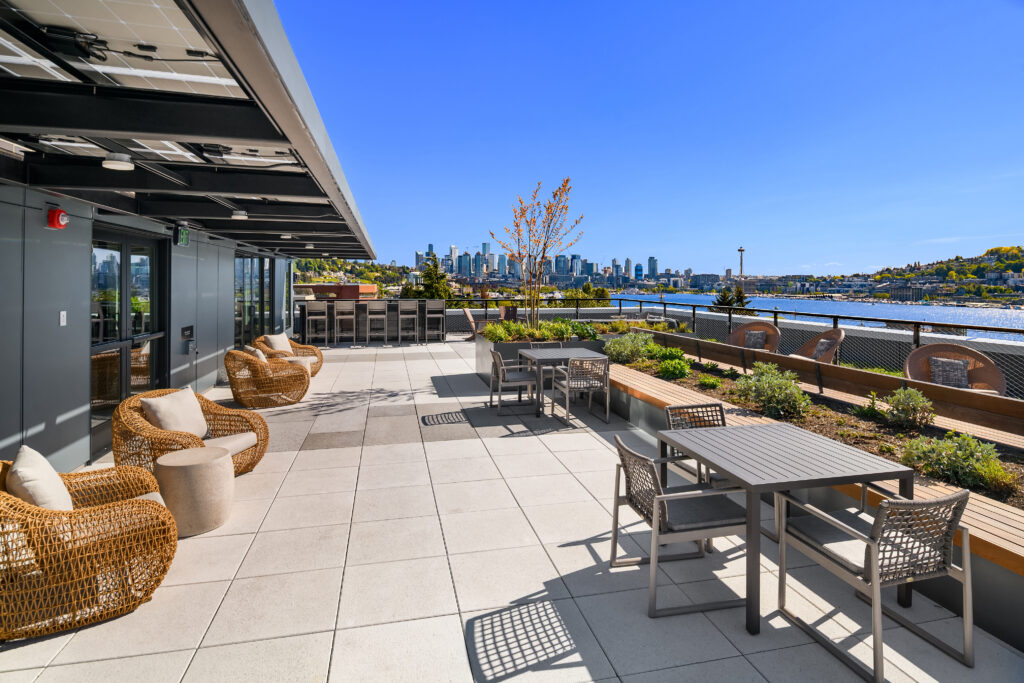
PHOTO CREDIT: Clarity NW – Ryan Slimak
Beauty Petal
I19 Beauty + Spirit
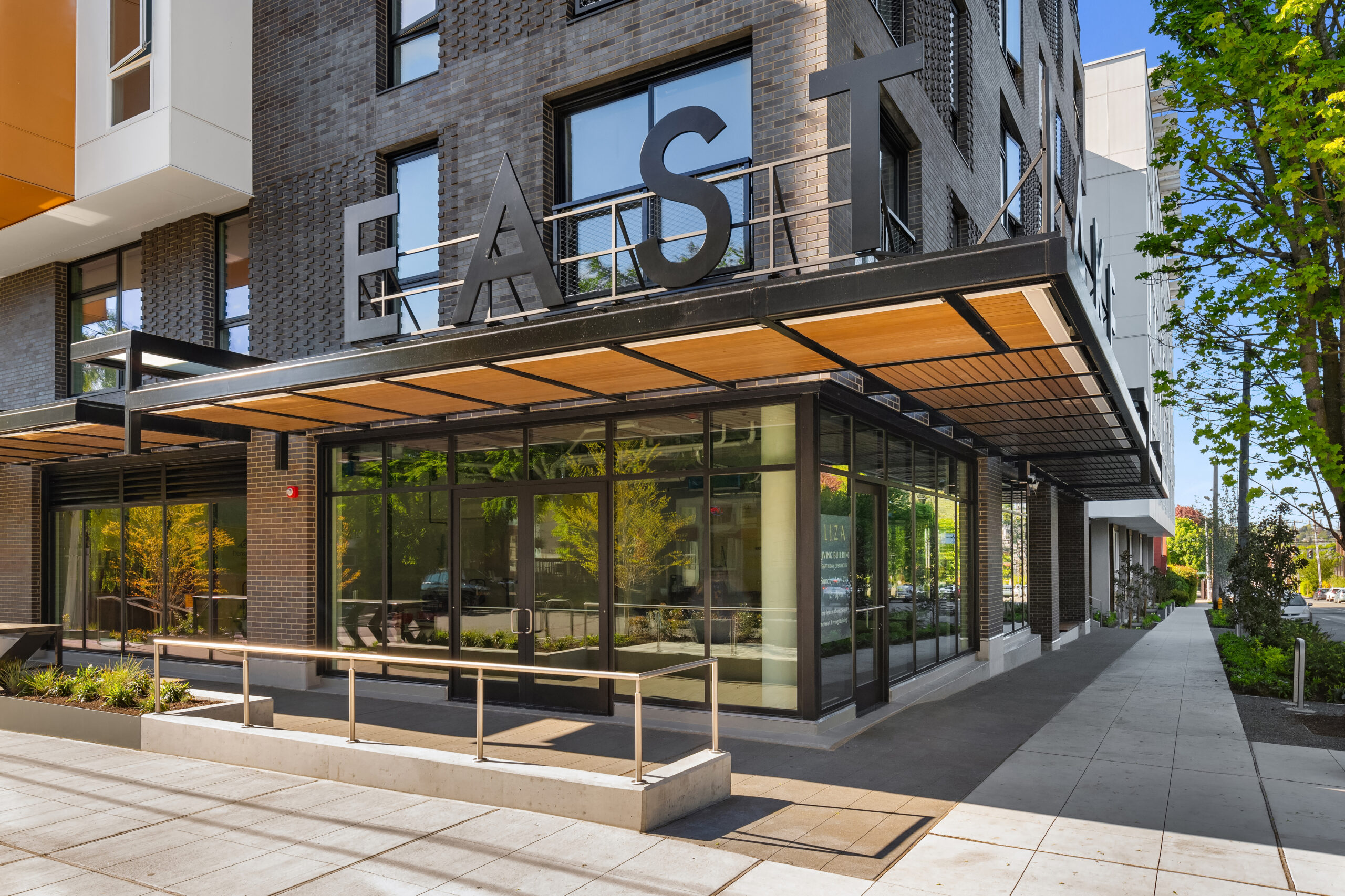
Liza’s exterior architecture includes many design elements, textures and details meant to delight the public, who may experience Liza driving by on Eastlake Ave, jogging or biking by on the 6-mile Lake Union loop, or playing at the adjacent Rogers Park. The building’s corner is composed of a dark iron brick incorporating textural fields of projecting Flemish Bond, punched window openings, and stainless steel cable mesh guardrail panels, reminiscent of fishing netting.
The project re-fabricated the existing “E-A-S-T-L-A-K-E” sign that was originally located on the former structure. The sign is now present on the top of the corner canopy and brands the neighborhood visually.
The lighter façade along Eastlake Ave fronts Rogers Park and the neighboring TOPS School and offers clear expression of a multi-story grid of residential apartment homes clad in white façade panels punctuated with recessed façade modulation elements and highly reflective phenolic panels to reflect the sky and greenery from the park. A memorable rooftop feature – projecting photovoltaic panel array serves as a biophilic signature.
The building includes townhouse units with entrances opening to Eastlake Ave. These two-level “treehouse” units meet the sidewalk and offer a pedestrian scale to the larger massing.
Liza’s interior design reflects a focus on biophilia, actively connecting residents with the natural world. From nearly every home, corridors and amenity spaces, there are views of verdant landscaping and the shimmering Lake Union. Corridors are daylit, 70% of homes have balconies and MERV 13 filters provide fresh, filtered air. The incorporation of live indoor plants in all common areas helps to bring nature indoors while improving air quality and enhancing the overall aesthetic and well-being of occupants. Interior finishes are warm and reminiscent of a lake house, with layers of woven textures, neutral tones with soft accents and custom art pieces that hint at the proximity of the lake.
In March 2025, we conducted a survey of residents living at Liza. The survey sought to identify how well the design team integrated features intended solely for human delight and the celebration of culture, spirit and place and meaningfully incorporated public art into Liza.
The team had concerns with achieving the required 10% response rate, as surveys are often ignored. To ensure we received enough responses, we offered gift cards to a local coffee shop for the first 20 respondents and entered all respondents into a drawing for a $100 gift card to their choice of local neighborhood restaurants.
We created the survey through Survey Monkey and asked residents to respond to how well we achieved various Living Building Challenge requirements. In total, 83 residents participated, representing approximately 30% of the residents living at Liza at that time.
With respect to how well we meaningfully integrated public art into the community, 93% of respondents thought the reinstallation of the E-A-S-T-L-A-K-E letters was a success. With respect to the public mural along Louisa Street, 92% of respondents felt it was successful.
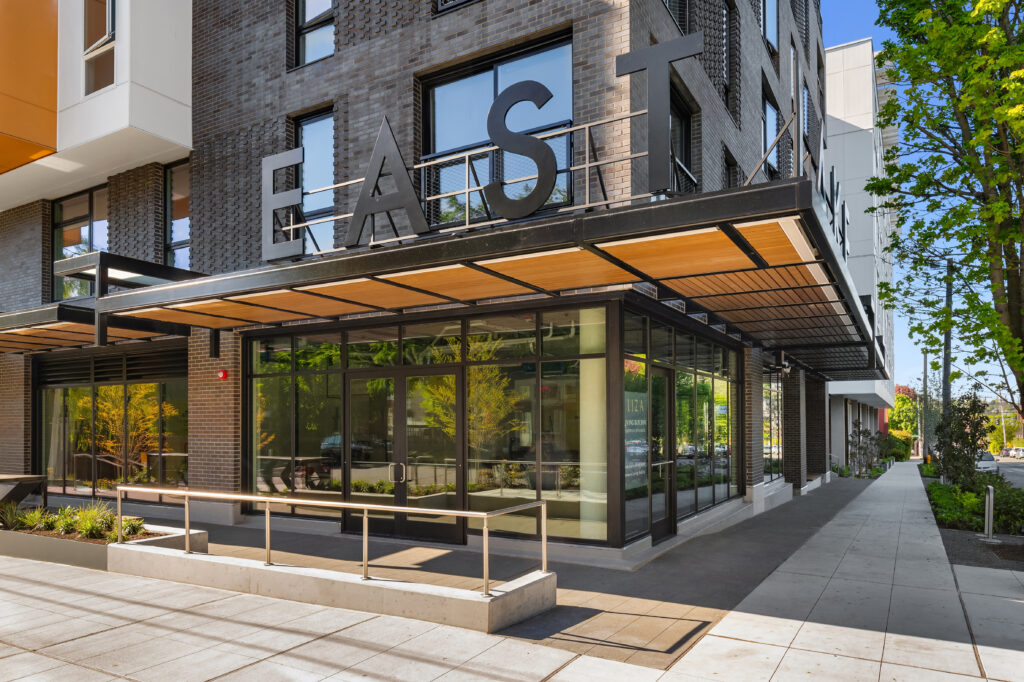
PHOTO CREDIT: Clarity NW – Ryan Slimak
We then asked residents to respond to how successful a variety of strategies were at “celebrating Liza’s location, its connection to the community, the environment and it’s sustainable features”. Overall, across all strategies, the majority of respondents felt we were successful. The strategies with the highest percentage of respondents indicating they were “successful” or “very successful” were the Lake Union inspired interior design (99%), the locally inspired landscape design (98%), the “treehouse” design of the street-level homes (96%) and the rooftop apiary (96%). The least successful strategy (though still with 84% of respondents thinking it was a success), were the reflective phenolic panels on the Eastlake Ave façade.
I20 Inspiration + Education
The Liza design team focused on many ways in which we could educate our residents, the local neighborhood, the public and other real estate developers about the sustainable operations and performance of the project. The ownership and property management teams have collaborated on two public open houses since the project opened. The first occurred on April 21, 2024 and corresponded with Earth Day, and was advertised in the local community newsletter and via signage. We estimate between 50-75 community members came to tour the project, which had just received its Certificate of Occupancy.
The event was a great way to share the project with neighbors, many of whom had suffered through the impacts of construction and were happy to see the project finally open. Leasing staff toured visitors through the common areas and vacant units and shared highlights of our Living Building strategies.
The second open house was held on June 20th, 2025. Despite our best efforts to advertise for this event (both in the Eastlake Community Council Newsletter and with signage facing Eastlake Ave), we had no attendees at this open house. While the team is disappointed, we can find a lesson learned in this experience. On reflection, it may be that some of the success of the large attendance of the first Open Day was due to the social media post that was part its advertising efforts. The team did not repeat this social media for the second Open Day. We will re-engage on social media for subsequent annual Open Days in the hopes to get attendance back up. It is also highly possible that the attendance of the first Open Day was aided by the fact that the building was new in the neighborhood, largely unoccupied, and in the market for tenants.
The first Open Day attracted not only those who are interested in learning about the Living Building Challenge, but also those in the neighborhood who wanted to check out their new neighbor and prospective tenants looking for a new home to rent. For the second Open Day, with the latter two reasons largely gone due to the building having already been in the neighborhood for a year and being almost completely rented out, the drop in attendance is more understandable.
The Liza team compiled an extensive Operations Manual for the property management and maintenance teams to ensure that staff are educated on the specific requirements of the project. Each Liza resident is given a brochure that highlights Liza’s Living Building sustainability efforts. They are also provided with a helpful list of ways they can contribute positively to these efforts – keeping lights off and appliances unplugged when not in use, programming their thermostats, and taking shorter showers to conserve water.
The design team came up with many creative ways to incorporate interpretive signage into the project. An a-board sign in front of the project asks “What is a Living Building?” and directs those interested to the Living Building page on our website. Infographic signs on walls near elevator lobbies outline how we’re saving energy and water.
A sign near our leasing office outlines all of the facets of Living Building and how Liza is achieving them. Along the public sidewalk, there’s a sign that says “LOOK HERE” with an arrow pointing toward a porthole window, which provides the public with a view into the building’s greywater treatment room and an explanation of how the system works to save water in the building. The view wasn’t as compelling as we had hoped (turns out greywater treatment equipment isn’t that exciting to look at) but we hope it will still serve to educate those passing by.
A mural by local artist Sarah Robbins greets pedestrians and highlights native flora.
One challenge we faced was how to integrate Living Building signage in our main lobby. This space was meant to feel like the lobby of a hotel, and generally devoid of anything that screams of marketing. The team came up with a clever solution to include a sign with a quote from the founder of the Living Building challenge, which was both inspirational and fit within the aesthetics of the lobby.
Within each apartment home, residents are reminded to turn off lights with a small sign above the light switch at their unit entry door saying “remember to turn off the lights!”. Tent cards are placed on toilets to let residents (and their guests) know about the graywater used in toilet flushing.
Our educational website can be found at www.theliza.com/livingbuilding. The site features sections describing our goals of net positive energy, water use reduction, biophilic design, place-making and inspiring and educating.
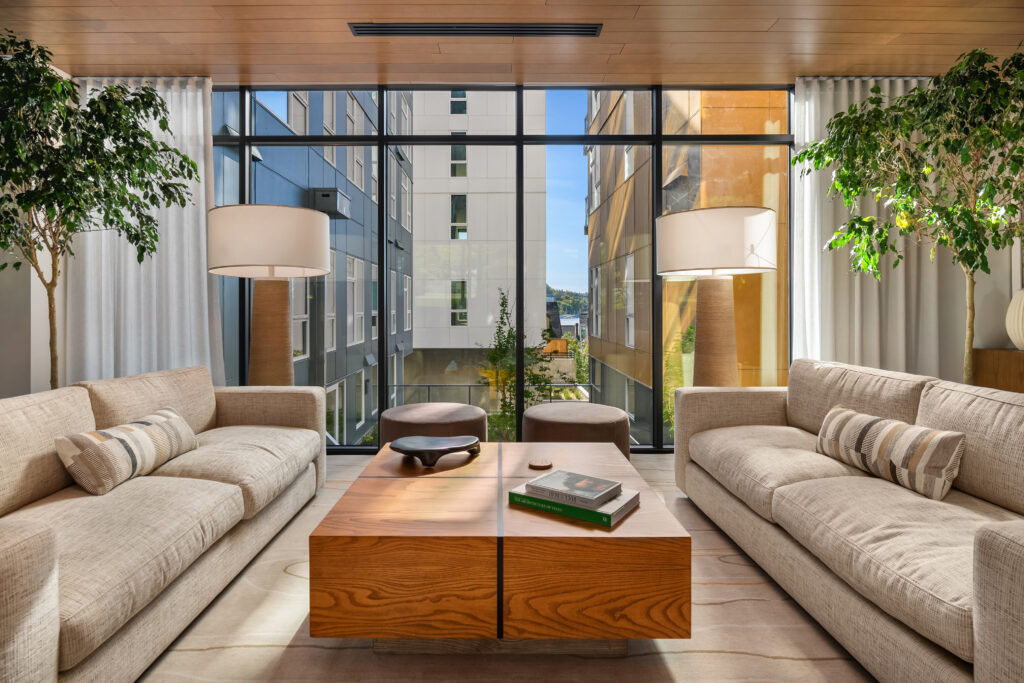
Photo Credit: Clarity NW – Ryan Slimak