
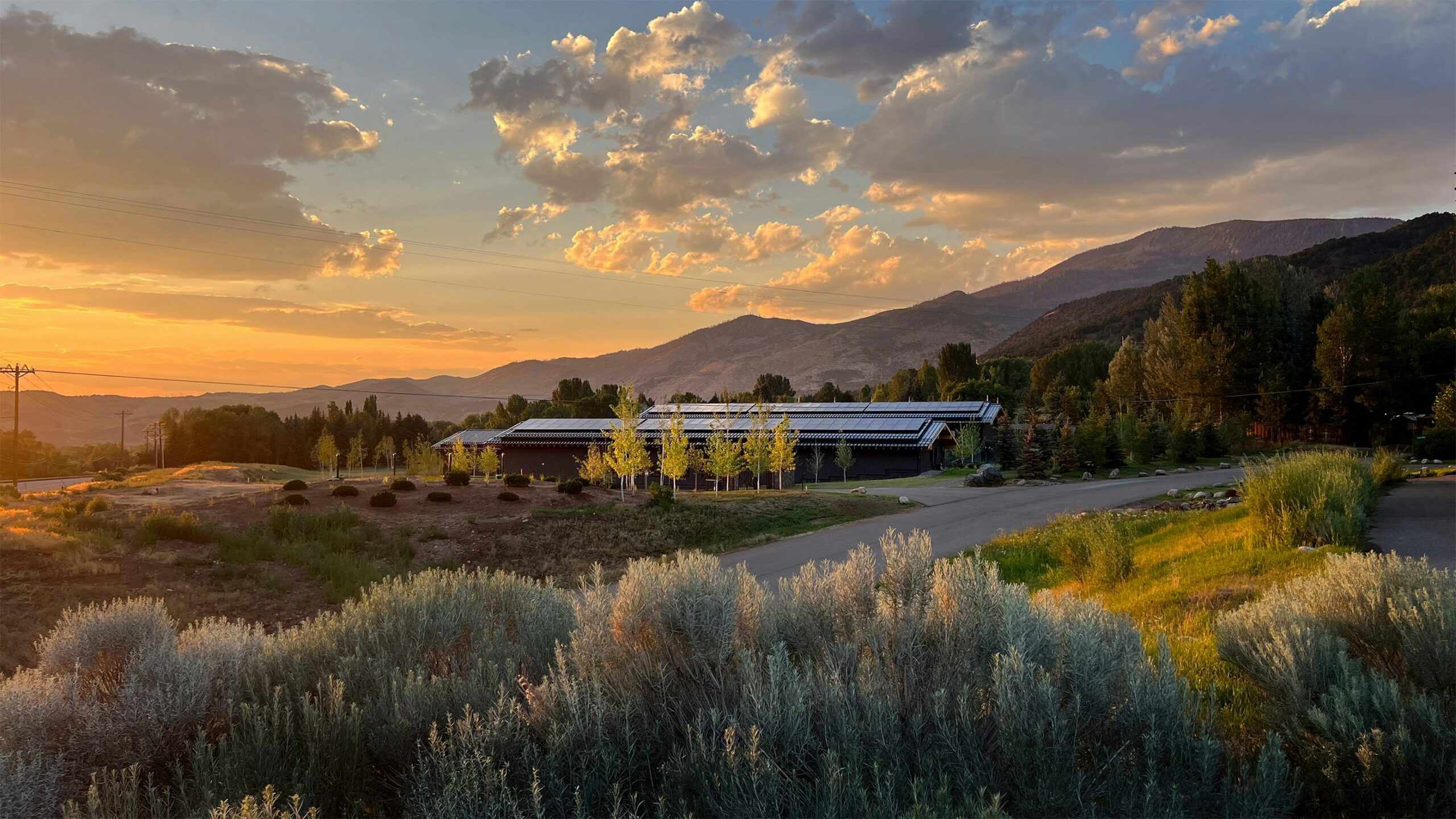
Project Overview
| Project Name | Aspen Distillery |
| Certification Type | Living Certification |
| Location | Basalt, Colorado |
| Typology | New Building |
| Start of Occupancy | June 2023 |
| Occupancy Type | Warehouse (Industrial) |
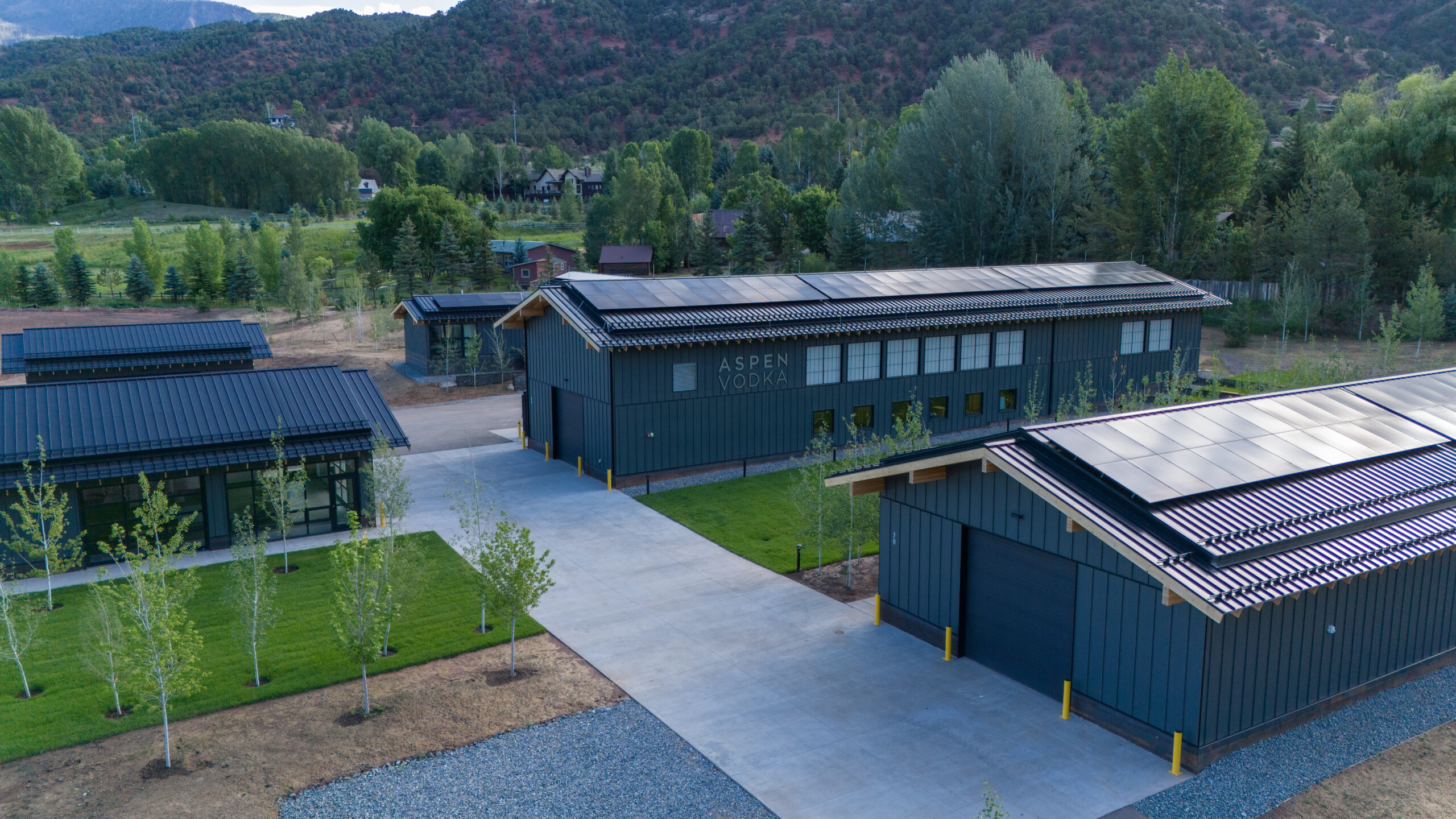
Photo Credit: Aspen Vodka
Aspen Distillers, located in Pitkin County, Colorado, was designed and built as a new kind of distillery — one that produces exceptional spirits in harmony with the land. The fully electric distillery campus is 8 acres will several buildings on site including the distillery itself – the building subject to our Living Building Challenge pursuit – and the supporting pumphouse building. The distillery and pumphouse serve as the manufacturing facility for Aspen Vodka.
Project Team
| Owner | Aspen Distillers |
| Certification Consultant | Group14 Engineering |
| General Contractor | RWI |
| Architects | Anderson Mason Dale Architects |
| Landscape Architect | Anderson Mason Dale Architects |
| Mechanical Engineer | Big Horn Engineering |
| Electrical Engineer | Big Horn Engineering |
| Plumbing Engineer | Big Horn Engineering |
| Civil Engineer | R&R Engineers |
| Structural Engineer | KL&A |
Early Design Process
Early in schematic design, Anderson Mason Dale recognized that Aspen Distillers held exceptionally ambitious sustainability goals and reached out to long- time partner, Group14 Engineering, to explore how best to translate those aspirations into measurable outcomes. Together, the team convened a sustainability-focused design workshop that brought together the owner, architects, engineers, and key consultants. During this workshop, it quickly became evident that Aspen Distillers was not only seeking operational efficiency but also wanted to create a regenerative facility that embodied environmental
stewardship. The owner expressed early interest in net zero energy, on-site water treatment, local agriculture, and a holistic approach to health and wellness—all indicators that this project could go beyond
conventional sustainability standards.
It was during this early workshop that Group14 first introduced the idea of pursuing certification under Living Future’s Living Building Challenge (LBC). The framework resonated strongly with the client’s mission and values. After evaluating the
overlap between LBC and LEED v4 for New Construction, the team agreed to pursue both, targeting LEED Platinum and full Living Building Challenge Certification.
The decision was communicated through a series of collaborative meetings and shared resources that outlined the implications for design, materials, and operations. These efforts helped to build collective buy- in and a shared vision of success. The team worked
collaboratively throughout design, construction, and into operations to identify challenges early and work to solve for issues as they arose – especially when it came to Red List vetting and sourcing materials through the supply chain challenges of the COVID19 pandemic.
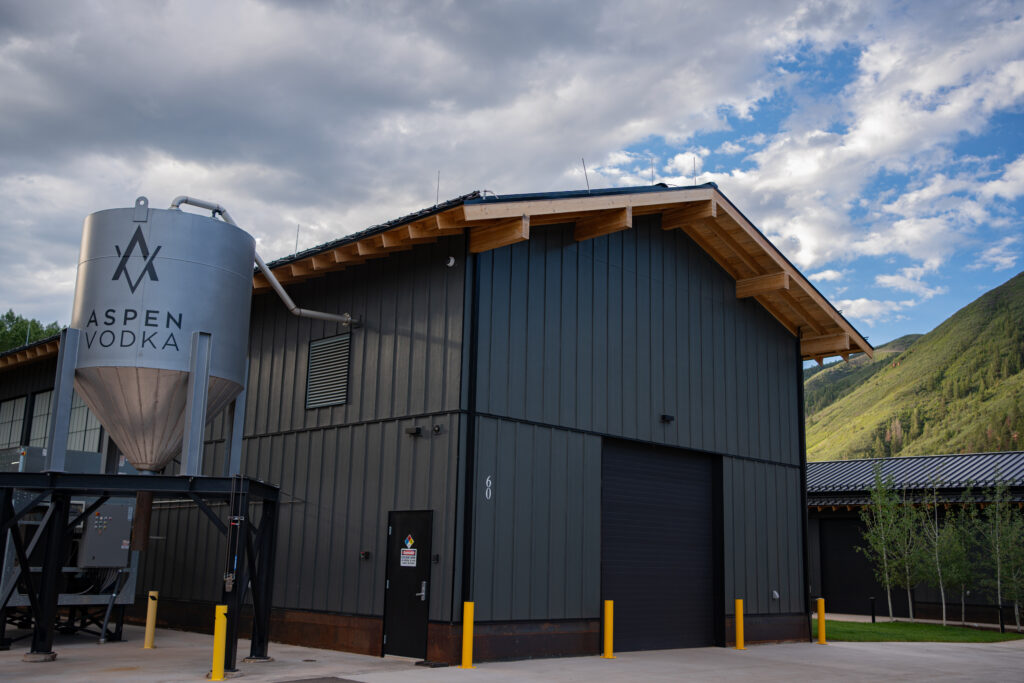
Photo Credit: aspen vodka
Advocacy to Local Jurisdictions
One challenge the team encountered during design development was achieving the Net Positive Energy imperative under the Living Building Challenge framework. The high energy intensity of the distilling process limited the ability to install sufficient on-site renewable generation to fully offset annual energy use while adhering to a net metering cap set by the local utility. Recognizing this, the project team engaged with utility representatives and Living Future to explore creative pathways that could satisfy both regulatory requirements and the intent of the certification.
The team’s proactive engagement helped local authorities better understand the innovative intent of the Living Building Challenge and its alignment with the community’s long-term sustainability objectives.
Ultimately, this collaboration resulted in optimizing the on-site photovoltaic array to the greatest extent feasible– exceeding the net metering cap – while also partnering with Holy Cross Energy to allocate verified off-site renewable energy from their expanding clean
energy portfolio that are now attributed to the project with retired RECs. This allowed Aspen Distillers to meet the intent of the Net Positive Energy imperative while simultaneously contributing to the growth of renewable infrastructure in the Roaring Fork Valley.
The process served not only as a technical solution but also as a model of how advocacy and transparent dialogue with local jurisdictions can advance sustainability innovation. By demonstrating the value of flexible, performance-based solutions, the team helped influence regional conversations around renewable energy integration for future high-performance projects.
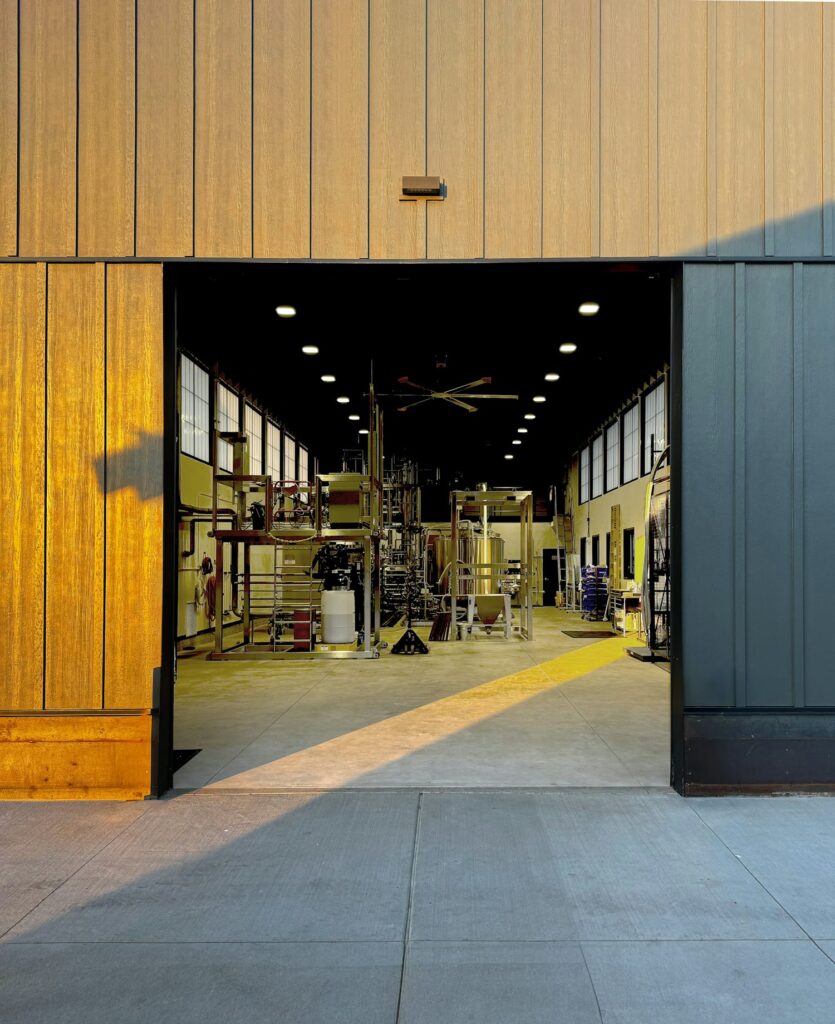
Photo Credit: Anderson Mason Dale Architects
Construction
The project team engaged the general contractor as soon as they were brought on board during the construction documents phase, recognizing the importance of early contractor involvement in achieving the rigorous requirements of the Living Building Challenge (LBC). This early collaboration allowed the entire team—including Anderson Mason Dale, Group14 Engineering, Aspen Distillers, RWI, and key subcontractors—to establish a shared understanding of
Living Future’s performance-based expectations and to integrate
those requirements directly into specifications, bid packages, and procurement processes.
From the outset, the contractor participated in training sessions and onboarding workshops led by Group14 to familiarize field teams and trade partners with the LBC imperatives—particularly Red List material vetting, waste management protocols, and documentation
requirements. To maintain transparency and alignment, the team created and regularly updated tracking tools that offers product documentation, tracked waste diversion data, and progress toward certification goals.
The team held weekly coordination meetings throughout construction, with additional check-ins whenever critical material decisions or substitutions arose. This structure was vital during the COVID-19 pandemic, when supply chain disruptions necessitated
rapid evaluation of alternative materials. When substitutions were required, the project team worked collaboratively to review manufacturer disclosures and compliance with Red List criteria. Where necessary, the team engaged directly with manufacturers to advocate for greater material transparency or to obtain further
documentation.
Several challenges emerged during construction that had the potential to impact certification—most notably around sourcing compliant materials in a relatively remote location. However, through proactive communication and a shared commitment to the project’s sustainability goals, the team was able to problem-solve in real time and identify “what good looks like” for any given decision.
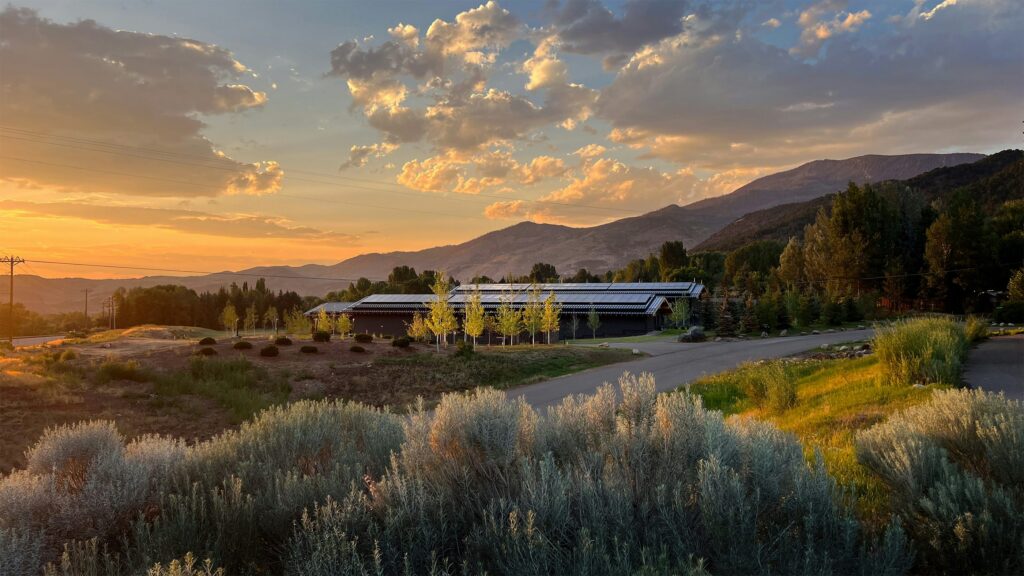
Photo Credit: Anderson Mason Dale Architects