
Project Overview
| Project Name | Box Factory |
| Certification Type | Zero Energy Certified |
| Location | Jackson, California |
| Typology | New Building |
| Start of Occupancy | 12/01/2019 |
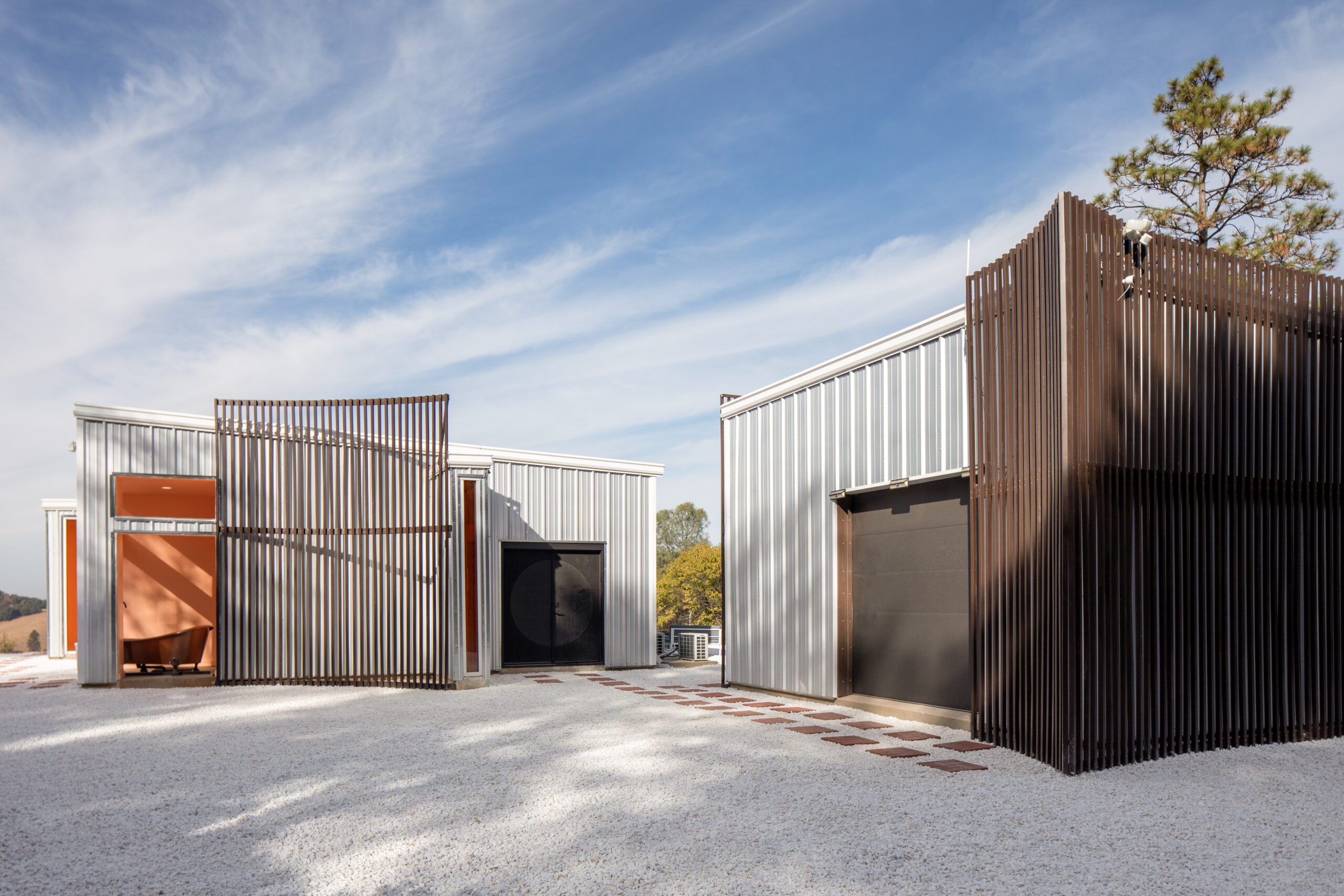
Photo Credit: Doug Birnbaum
The project is Zero Energy and relies only on onsite solar for all its operations. On the energy and climate side, the project is all‑electric, 3 years ahead of local mandates and is powered by onsite PV, designed as a “living model” of net‑positive operational energy resilience. Heat pumps provide space conditioning and water heating, and an induction kitchen eliminates combustion, cutting carbon and maintaining healthy indoor air even during smoke events.
Project Team
| Owner | Box Lab |
| Electrical | hb+a Architects |
| General Contractor | Box Lab |
| Architects | Hafsa Burt – hb+a Architects |
| Landscape Consultant | Hafsa Burt & Eduard Burt |
| MEP Engineer of Record | Hafsa and Eduard Burt |
| Civil Engineer | Hafsa Burt |
| Interior Design | Hafsa Burt |
| Structural Engineer | SDE Engineering and Hafsa Burt |
| Sustainability Consultant | Hafsa Burt |
Early Design Process
From the first conversations, the design process was driven by a simple but demanding brief: achieve true Zero Energy performance while holding to a “just enough” philosophy in programming and form. The team treated compactness as a performance tool, working with the client to rigorously right‑size each space so that every square foot carried its weight in function, comfort, or flexibility. That discipline yields a tight, efficient massing paired with a high‑performance envelope and a thermally active slab, which together suppress heating and cooling loads before systems are even considered. Orientation, exterior shading, carefully placed operable windows, and ceiling fans are all calibrated to local sun angles and prevailing winds, so passive comfort strategies are not decorative they are the first line of climate control.
On the energy and climate side, the building is unapologetically all‑electric, delivered three years ahead of local requirements and powered by onsite PV sized and monitored as a “living model” of net‑positive operational resilience. High‑efficiency heat pumps serve both space conditioning and domestic hot water, while an induction kitchen removes on‑site combustion entirely, driving down carbon emissions and preserving indoor air quality during regional smoke events. The result is a rigorously low‑carbon building type: technically resolved, compact yet generous in use, and framed as evidence that disciplined programming, precise envelope design, and straightforward electric systems can meaningfully advance Zero Energy practice.
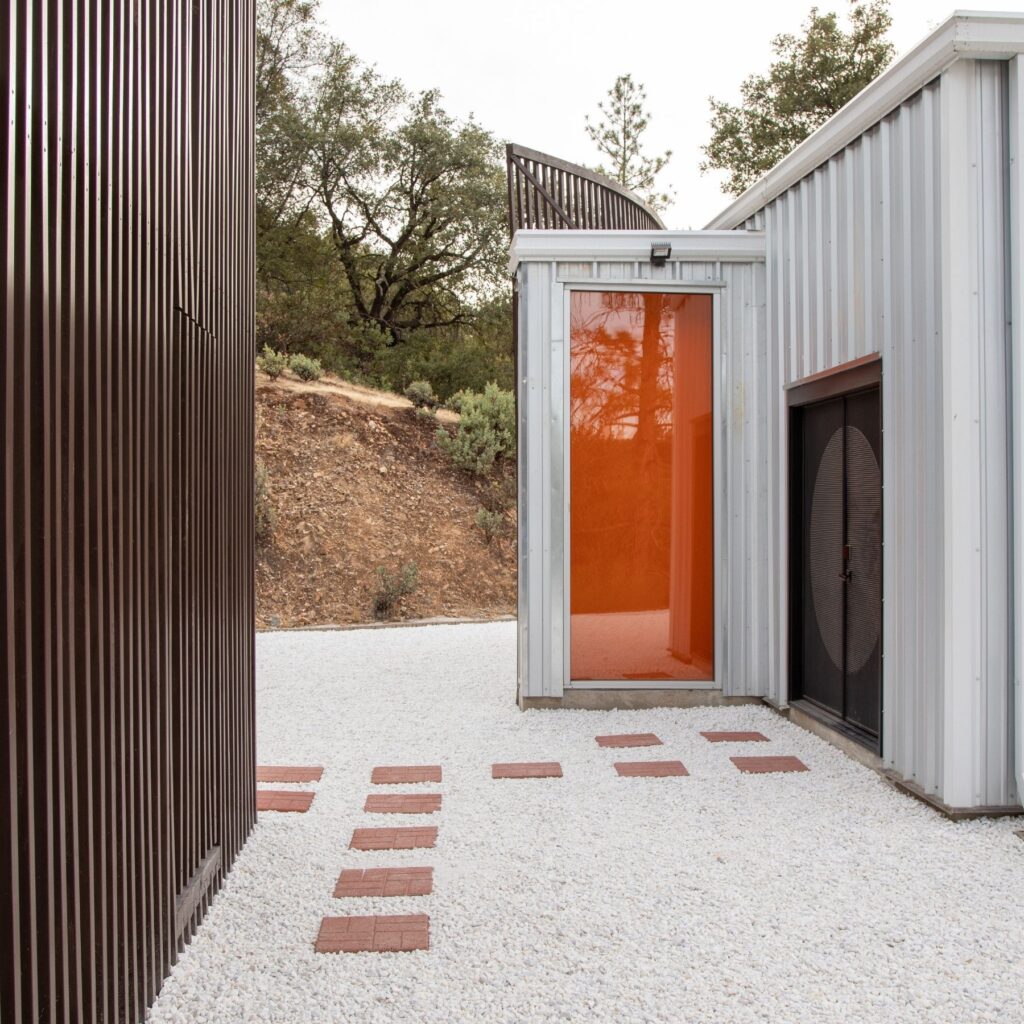
Photo Credit: Doug Birnbaum
Lessons Learned
Resilience for this project is defined very directly as a response to climate risk, not as an abstract idea. Located in a wildfire‑prone part of California that was hit by the 2022 Electra Fire, the building is deliberately designed to stay habitable during power shutoffs and extended smoke events, with systems and detailing that maintain clean air, safe temperatures, water, and the ability to cook when nearby homes cannot. During the Electra Fire, this was tested in real conditions: the Box Factory functioned as a resilience hub for neighboring properties through major power shutoffs and evacuations, exactly as intended, giving displaced residents a safe, stable place to gather and recover.
Technically, the project operates as an integrated, full‑scale prototype for climate‑ready rural infrastructure, sitting several years ahead of many current projects and policy mandates on resilience. Its all‑electric, solar‑powered systems, envelope performance, and passive strategies are coordinated so that mitigation (deeply reduced operational emissions), adaptation (continued function under heat, smoke, and grid disruption), and community protection all reinforce one another rather than competing for priority. In that sense, the Box Factory is less a one‑off building and more a working model for how future‑forward design can braid climate mitigation, climate adaptation, and social resilience into a single, coherent architectural response.
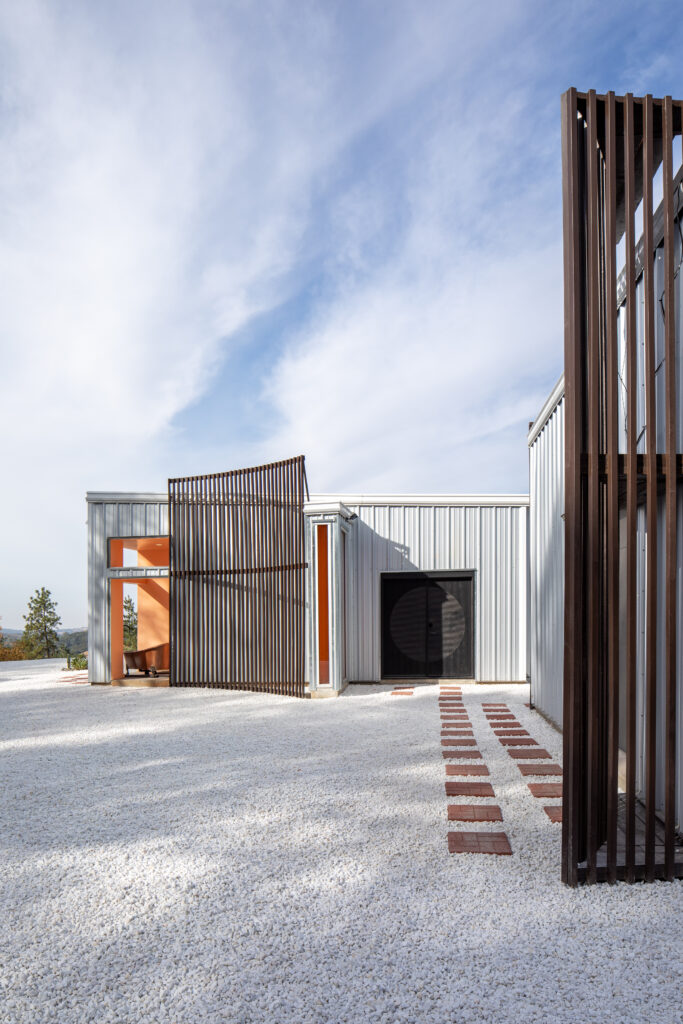
Photo Credit: Doug Birnbaum
Product Selection / Material Reuse
The team kept the existing slab and chose to design the building precisely to that footprint rather than demolish and start over, directly cutting embodied emissions and avoiding unnecessary construction impact. That decision set the tone for the rest of the project. Prefabricated structural components further reduced waste, noise, and on‑site disruption, and they also make future disassembly, relocation, or reuse far more realistic an intentional move toward circular‑economy thinking rather than a one‑off, “build it and forget it” approach. A whole‑building life‑cycle assessment was completed well before any mandates would have required it, and the results weren’t just filed away; they actively guided low‑carbon material choices, detailing, and construction sequencing so the design and the data stayed tightly linked.
At the scale of the site, the project follows the same philosophy of doing only what’s necessary and no more. On its 9‑acre parcel, the building and its immediate outdoor zone occupy only a small portion of the land, leaving most of the site including existing native species, wildlife habitat, and a creek corridor largely undisturbed. This light‑touch approach aligns with resilience frameworks that foreground nature‑based solutions: maintaining ecological function, supporting biodiversity, and letting the landscape itself help absorb and buffer climate stresses. Taken together, these decisions make the Box Factory both a low‑carbon building and a considerate neighbor in its environment, pairing material frugality with a climate‑adaptive landscape strategy that feels grounded and real rather than theoretical.
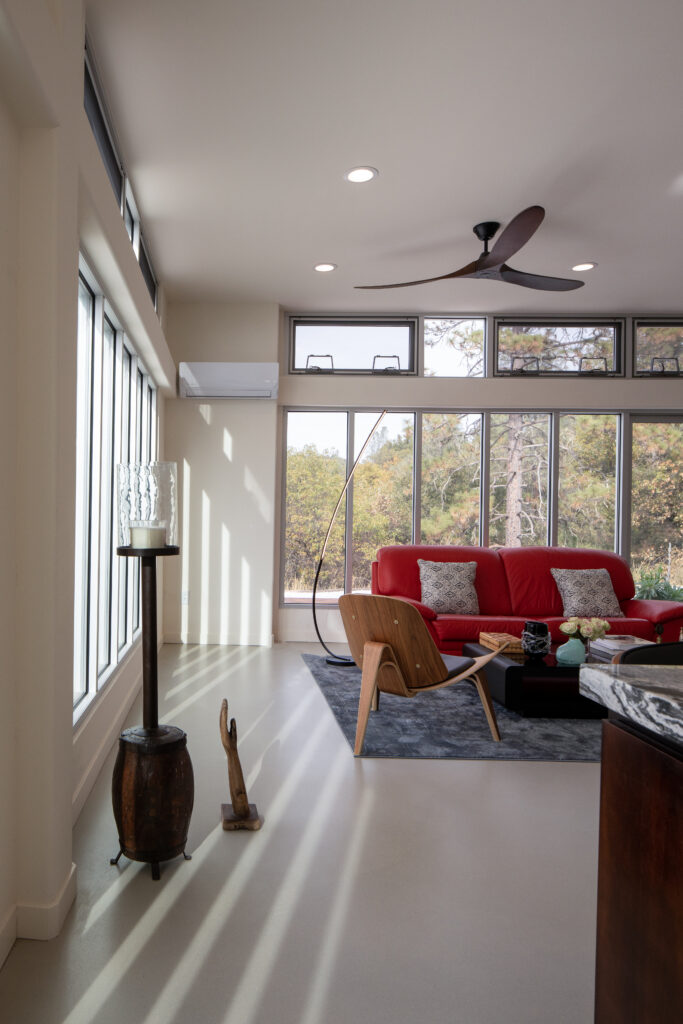
Photo Credit: Doug Birnbaum