
Project Overview
| Project Name | Ninebark |
| Certification Type | Zero Energy 1.0 |
| Gross Building Area | 7,220 square feet |
| Location | Washougal, Washington, USA |
| Typology | New Building |
| Start of Occupancy | 08/01/2023 |
| Building Type | Residential |
| Number of Occupants | 5 |
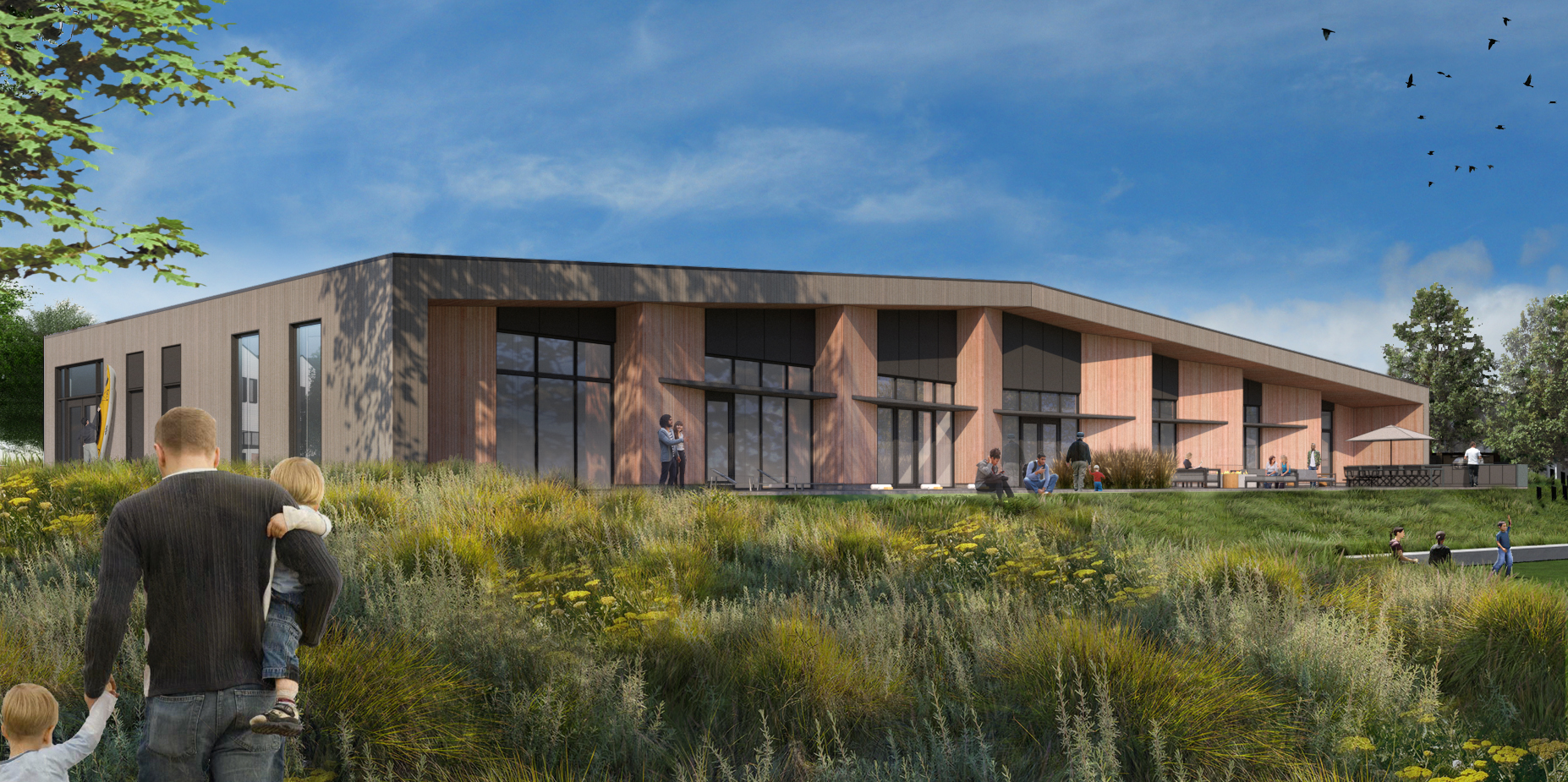
Photo Credit Christian Columbres
Ninebark is a 242-unit apartment community located in the growing Camas-Washougal market of Southwest Washington. The development includes eight three-story residential buildings and a freestanding, amenity-rich clubhouse known as Riverside Retreat. Located along the Columbia River, Ninebark offers direct access to Waterfront Park, the Port of Camas-Washougal Master Plan site, and a network of walking trails and riverfront access. Residents enjoy walkable access to local restaurants, bars, coffee shops, and grocery stores. Sustainability is central to Ninebark’s identity. The property was awarded both Fitwel and Salmon-Safe certifications and features an on-site composting program, an urban beehive, 72 EV charging stations, and all-electric building systems. Eagle View Park, a newly created one-acre public park, enhances both ecological value and community connection to nature.
At the heart of the community, the Riverside Retreat clubhouse showcases high-performance building strategies and is pursuing ILFI Zero Energy certification. The clubhouse integrates low-carbon materials, efficient mechanical systems, and rooftop solar to support long-term operational performance. Its design reflects Ninebark’s broader values of environmental responsibility and climate-responsive development, serving as both a community hub and a model for replicable, high-performance multifamily design.
Project Team
| Owner | Killian Pacific |
| Building Representative | Robertson & Olson Construction Inc. |
| General Contractor | Holst |
| Mechanical Engineer | Interface Engineering |
| Electrical Engineer | Interface Engineering |
| Plumbing Engineer | Interface Engineering |
| Civil Engineer | Dowl |
Early Design Process
From the outset, Killian Pacific approached the Ninebark project with a strong emphasis on environmental stewardship and a clear intent to embed sustainability into both the design process and the project’s identity. Uniquely, the ownership team initiated a branding and identity strategy earlier than is typical for projects of this scale. This early effort helped set a unified vision that centered sustainability as a defining principle. That clarity gave the project team a confident foundation from which to explore and ultimately pursue third-party certification.
The expectation to identify and commit to a suitable certification path was communicated from the beginning and reinforced throughout the design and construction process. This helped establish a shared understanding among all team members that sustainability would be a central component of project delivery.
Rather than selecting a single certification system upfront, the team partnered with a third-party sustainability consultant and held a workshop to evaluate a wide range of certification pathways. This facilitated open, cross-disciplinary dialogue and resulted in two key deliverables: a comparative table of seven different rating systems and a feasibility report that analyzed applicability, costs, scope, and required prerequisites for each system. These tools gave the team the context and insight to make an informed, strategic decision.
The result was a multi-pronged certification strategy tailored to the unique attributes of the Ninebark development. The clubhouse was selected to pursue ILFI’s Zero Energy certification, while Fitwel and Salmon-Safe were applied more broadly across the project and site. This approach reflected Killian Pacific’s belief that no single framework captures all project goals, and that certification should be responsive to a project’s scale, function, and opportunities.
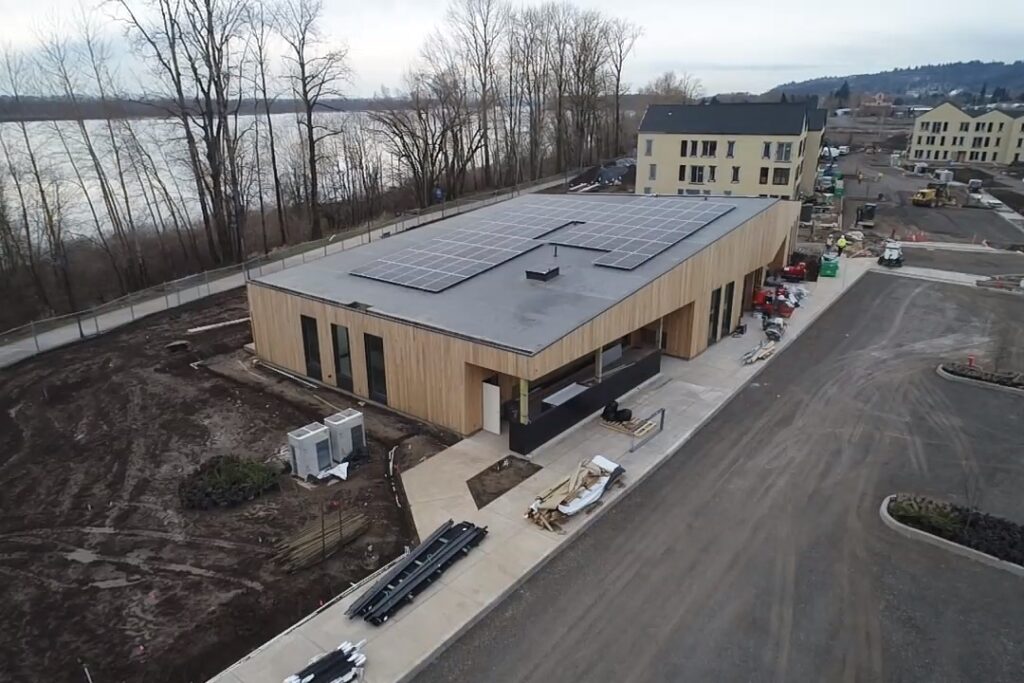
Photo Credit Christian Columbres
Focusing Zero Energy efforts on the clubhouse allowed the team to concentrate design and construction resources on a manageable yet highly visible footprint that could serve as a model for high-performance design within a larger multifamily context. With the sustainability consultant engaged early in Schematic Design, the team was able to align critical decisions around site planning, mechanical systems, and envelope design with Zero Energy goals.
A key learning from Ninebark was that initiating branding and sustainability discussions early and well ahead of typical project milestones helped establish a clear, cohesive vision that carried through every phase of the project. This early integration provided the continuity and momentum needed to sustain the goals from concept through completion.
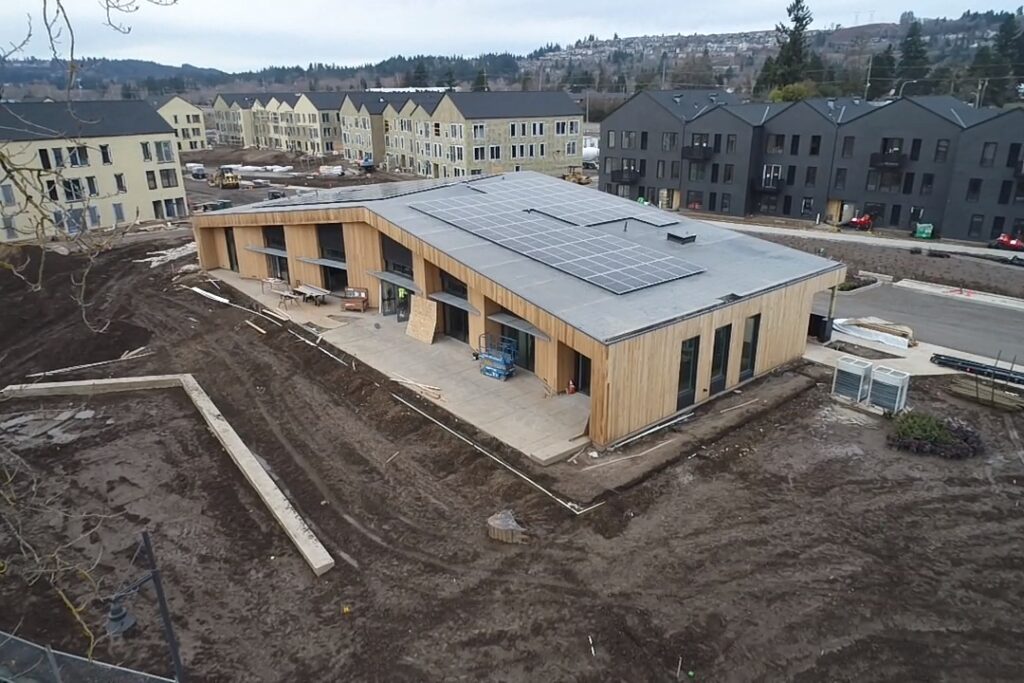
Photo Credit Christian Columbres
Product Selection/Material Reuse
The Ninebark clubhouse material selection strategy balances high performance, regional identity, and environmental responsibility. Three key selections are central to achieving the project’s energy performance and sustainability goals: locally sourced and FSC-certified cedar siding, an above-deck insulated roof, and high-performance exterior walls using mineral wool insulation.
Locally Sourced & FSC-Certified Cedar Siding
The project team made a deliberate decision to use both locally sourced and FSC-certified cedar siding. This choice reinforces a strong connection to place while meeting high sustainability standards. Harvested and milled in the Pacific Northwest, the selected wood reduces transportation-related emissions and supports local mills and craftspeople. At the same time, FSC certification provides third-party assurance that the material comes from responsibly managed forests, protecting biodiversity and promoting fair labor practices. The natural warmth and texture of the cedar complement the building’s riverside setting and forested surroundings, creating a visual and material connection to the site. This strategy supports the project’s environmental goals while enriching its aesthetic character, narrative depth, and sense of place.
Above-Deck Roof Insulation
To minimize thermal losses and increase building durability, the design team implemented R-49 rigid insulation placed above the roof deck, outside the building envelope. Locating the insulation externally significantly improves thermal performance by eliminating or greatly reducing thermal bridging through the framing. This continuous insulation strategy keeps the roof deck warmer and above the dew point, thereby reducing the risk of condensation and freeze-thaw damage. As a result, it enhances energy efficiency and extends the life of the building envelope. The assembly also contributes to stable interior temperatures and reduced heating and cooling loads throughout the year.
High-Performance Exterior Wall Assembly
The wall system combines R-21 fiberglass insulation within the wood stud cavity, two inches of continuous mineral wool on the exterior, and a Fortifiber commercial-grade weather barrier. This assembly delivers an effective R-value of approximately R-29, significantly outperforming cavity-only systems, while offering enhanced durability, occupant comfort, and energy efficiency.
Mineral wool offers several key advantages:
- Moisture resilience: It keeps the wall sheathing warmer, reducing the risk of condensation. Vapor-permeable and hydrophobic, it repels bulk water while allowing outward drying, improving long-term material durability.
- Low embodied carbon: Compared to foam exterior boards, mineral wool significantly reduces embodied carbon impacts.
- Fire resistance: As a naturally fire-resistant and non-combustible material, mineral wool adds a layer of passive protection not present in most foam insulations.
Together, these material choices reflect the project team’s commitment not only to meeting Zero Energy targets but also to demonstrating how sustainability, durability, and regional sourcing can coexist in a thoughtful and replicable way.
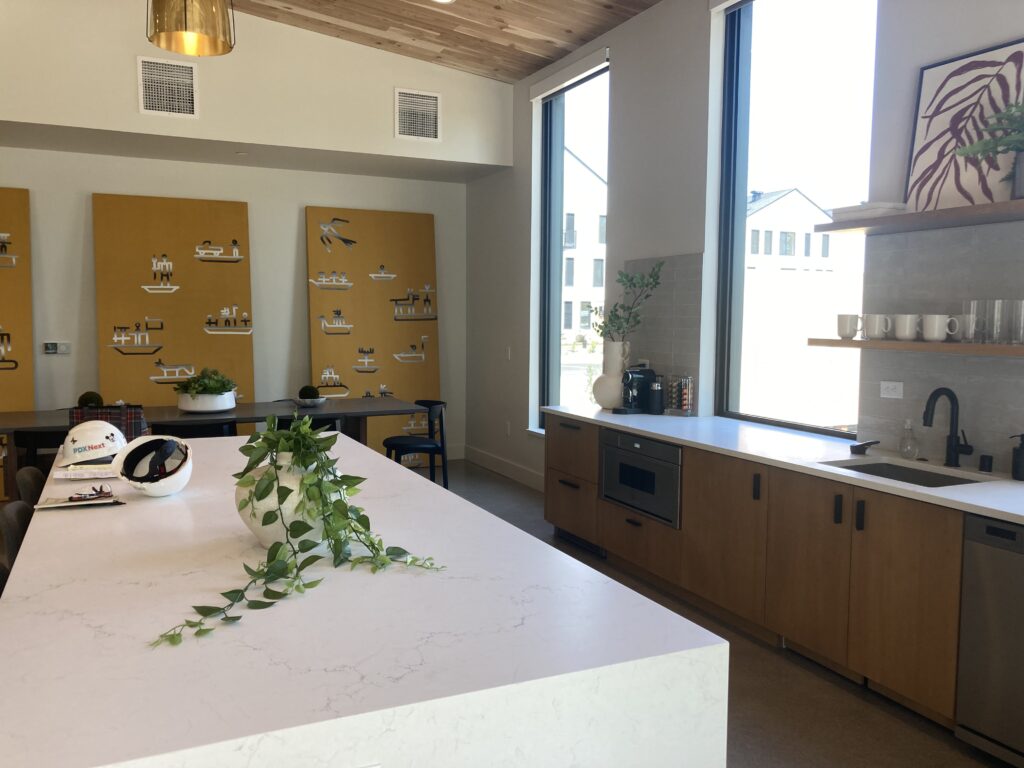
Photo Credit Christian Columbres
Occupancy
Since opening, the Riverside Retreat clubhouse has quickly become a well-loved and highly utilized space within the Ninebark community. Envisioned as both a gateway to the outdoors and a community anchor, the building celebrates regional identity through locally curated artwork, natural materials, and seamless indoor-outdoor connections. Residents use the space regularly, not only for fitness and recreation, but also for work, social gatherings, and community events.
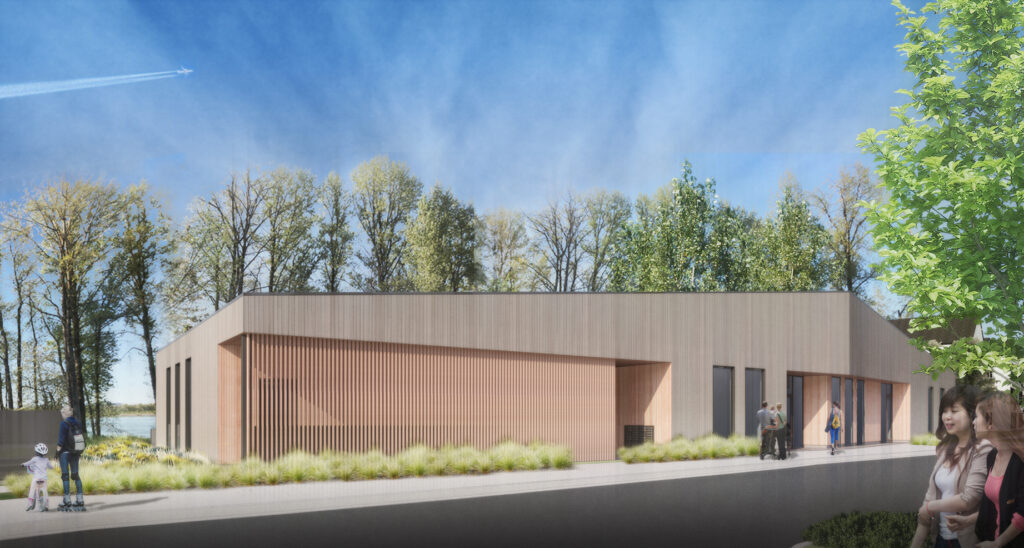
Photo Credit Christian Columbres
The amenity-rich design includes a fitness center, indoor/outdoor community lounge and kitchen with an electric grill and water vapor fireplace, private meeting rooms, flexible co-working areas, and a fully stocked gear shed with equipment for kayaking, biking, and dog washing. The space also houses the leasing office, making it the first point of contact for prospective residents and guests. Its comfort, utility, and inviting design has made it far more popular than originally anticipated.
As a result, occupant usage has exceeded expectations, both in duration and intensity. While this high level of engagement is a clear success from a design and community-building perspective, it has placed greater demands on the building’s energy systems, particularly those related to HVAC and plug loads.
The project team has responded with a combination of occupant education, system monitoring, and operational adjustments. Staff have implemented behavioral guidance, including asking users to avoid adjusting thermostats, keeping doors closed, and limiting use of high-consumption features like vestibule heaters and televisions when not in use. Temperature setpoints have been refined and electricity monitoring devices are being installed to track and verify real-time energy use.
In parallel, mechanical systems are actively monitored and tested by maintenance personnel to ensure they are performing as designed and recommissioning will be explored as needed to fine-tune the systems. The rooftop solar array is on a regular maintenance schedule, including removal of pine needles, snow, and dust to maintain optimal energy production.
The increased energy demand prompted the operations team to take a closer look at building performance, ultimately leading to a more proactive and detailed approach to routine operations. Ongoing diligence through utility tracking, preventive maintenance, and real-time troubleshooting helps ensure the project not only meets its performance goals but also supports long-term building health and resilience. This creates a win-win for both sustainability and operations.
The experience at Ninebark underscores that the path to Net Zero is rarely static. Real-world usage reveals the need for flexibility and responsiveness. These lessons are invaluable for future projects seeking to translate Zero Energy principles into lasting performance impacts.
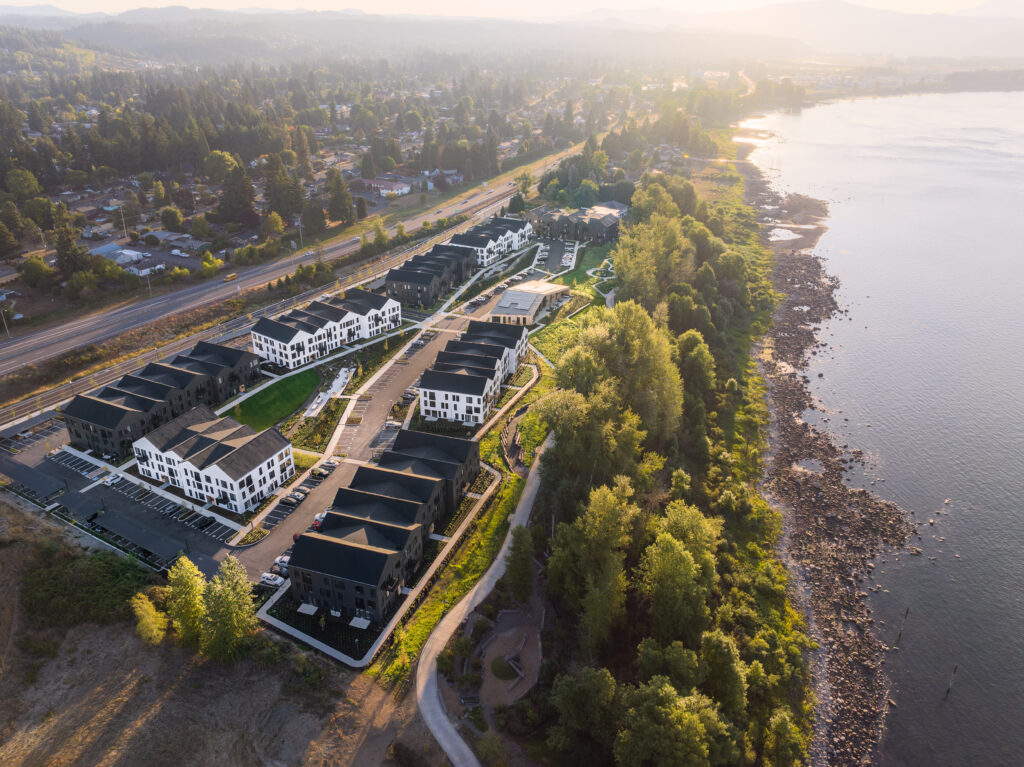
Photo Credit Christian Columbres